Hardware|14 minutes Read
The Death of the Discrete GPU: Why Integrated Hardware is Finally Catching Up
Ethnickoti

I remember my first build. It was 2008, and the ritual was sacred: find a case, slot in the CPU, and then the crown jewel the graphics card. It was a massive, power-hungry slab of silicon that made the room five degrees hotter. Back then, if you wanted to do anything serious, you needed that extra physical hardware. Integrated graphics were for office tasks, Excel spreadsheets, and playing Minesweeper at five frames per second. It was the law of the land.
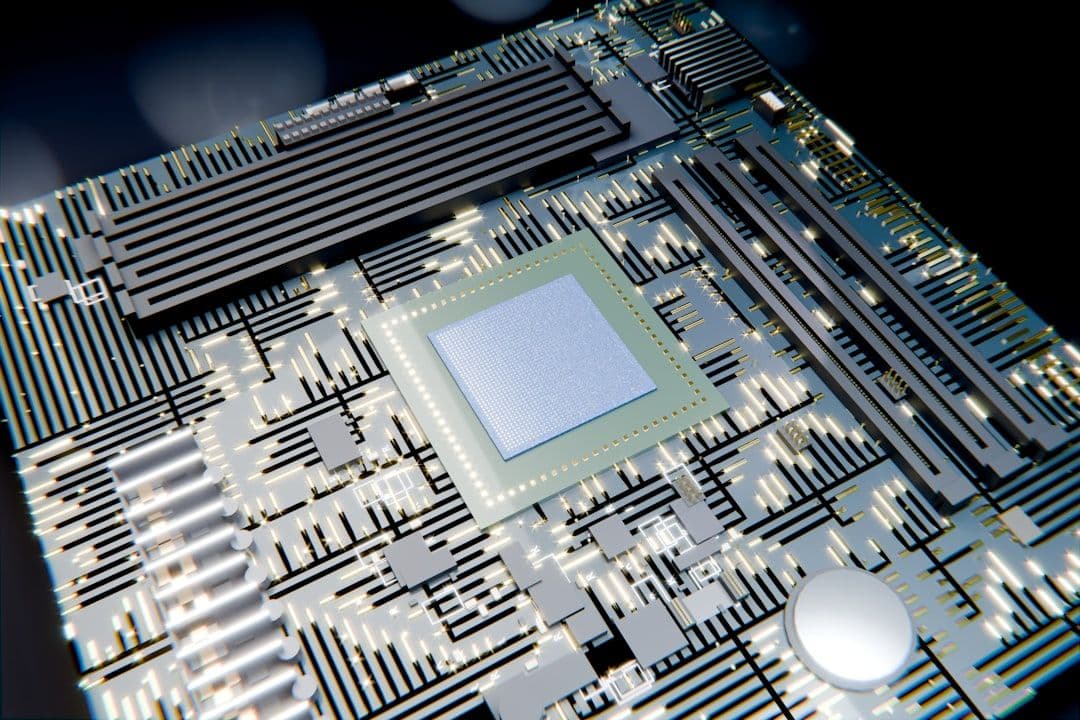
But something shifted. It didn't happen overnight, and frankly, a lot of us missed the early signs because we were too busy looking at benchmarks for the next big dedicated card. Today, I look at the machine on my desk, and I realize I haven't added a discrete card in three years. My system runs everything I throw at it, from high-fidelity rendering to modern titles, all on a chip that barely takes up the size of a postage stamp. We aren't just talking about iterative improvements here. We are witnessing the slow, quiet sunset of the discrete GPU as the default requirement for high-performance computing.
To understand why the discrete card is on life support, you have to look at the wiring. For decades, the primary bottleneck in computing hasn't been the processing power itself; it has been the distance the data has to travel. You have a CPU over here, a discrete GPU over there, and a long, messy highway of PCIe lanes connecting them. Every time data moves across that bridge, it loses energy and time. It waits in queues. It buffers.
Now, look at the new unified architectures. When everything lives on the same die, that highway just disappeared. The latency drops to almost nothing. It is like moving from a world where you have to send a telegram across the ocean to a world where you are just tapping someone on the shoulder. This isn't just a technical upgrade; it changes the rules of engagement for software developers. They no longer have to code around the limitations of bandwidth between the card and the processor.
I recall reading about early shared memory systems. They were notoriously sluggish, always stealing from the system RAM and leaving the OS gasping for air. It was a messy compromise. But modern System-on-a-Chip (SoC) designs have solved this by essentially making the RAM part of the chip architecture itself. We aren't sharing anymore; we are co-existing in a high-speed pool of data that both the CPU and GPU can access simultaneously without shuffling files back and forth like a frantic accountant.
This is what kills the need for massive VRAM on a dedicated card. Why bother with 16GB of dedicated video memory when you can have a massive, unified bank of high-bandwidth memory that adapts to whatever the application needs at that exact millisecond? It is efficient. It is elegant. And it makes 300-watt power envelopes look like relics from the Stone Age.
There is a stubborn pride in the PC gaming community that equates "better" with "bigger." We want the triple-fan cooling solutions, the blinking lights, the heavy heat sinks. We associated heat and noise with power. If the room didn't get hot, we figured we weren't really working the machine hard enough.
But the market is shifting toward silent, cool, and compact. Look at the rise of the small form factor (SFF) builds. People are realizing that they don't want a refrigerator-sized tower under their desk. They want a machine that sits quietly on a shelf, doing its job without sounding like a jet engine preparing for takeoff. The new integrated hardware allows for this. You can now pack workstation-level graphical power into a chassis smaller than a thick hardcover book. That is a freedom we didn't have before.
It isn't just about gaming. If you are doing machine learning or professional video editing, you used to be forced into buying enterprise-grade discrete cards that cost as much as a used car. The proprietary nature of those cards was a lock-in mechanism. You bought the card, you stayed in the ecosystem.
With integrated silicon gaining ground, we are seeing democratization. The AI models that used to require a farm of expensive, dedicated server hardware are now running, albeit differently, on high-end integrated chips. The barrier to entry for creators is cratering. You don't need a six-figure setup to experiment with local LLMs or complex generative workflows anymore. You just need a well-designed chip.
I should clarify: we aren't seeing the total disappearance of the discrete card tomorrow. For the absolute fringe of the market the ultra-enthusiasts who want 4K path-traced gaming at 240Hz, or the scientists running massive simulations there will always be a place for the external monster card. That is the peak of the pyramid.
But the pyramid is changing shape. The bulk of the pyramid where 90% of gamers and professionals live is being hollowed out by integrated efficiency. When the "good enough" tier of integrated hardware crosses the threshold into "truly excellent," the economic argument for buying a $1,000 card for the average user evaporates. It is a slow death by a thousand features, but it is happening nonetheless.
I find myself feeling a strange sense of nostalgia for those massive, glowing cards. They represented a specific era of hardware enthusiasm where more was always better. But looking at the thin, impossibly fast machines we have today, I don't feel like we've lost anything. We've just matured. Computing is becoming more integrated, more transparent, and dare I say a bit more human in its design. We stopped building tanks and started building instruments.
Not for the top 5% of use cases. If you need absolute peak power for professional rendering or extreme gaming, discrete cards still hold the crown. However, for 95% of users, the performance gap has narrowed to the point where you likely won't notice the difference in daily, real-world tasks.
The difference is massive. A discrete card can pull 200 to 400 watts on its own. An integrated solution is often more power-efficient per frame rendered, which means less heat, less fan noise, and a significantly lower electricity bill over the life of the machine.
That was a major issue a decade ago. Today’s architectures use high-bandwidth, low-latency memory pools that act as a shared resource. The OS is smart enough to prioritize traffic, and the proximity of the hardware means the data moves faster than it ever could across a PCIe bus.
Not at all. You should just shift your focus. Instead of obsessing over GPU benchmarks, look at the CPU and memory architecture of your next system. That is where the real performance gains are hiding in 2026.
The hobby is just changing. We used to be mechanics, bolting together parts. Now we are more like architects, choosing cohesive systems that fit our specific lifestyle. It is still a hobby; it is just becoming more sophisticated and less about brute force.
Ethnic Koti Editorial Team. (2026). "The Death of the Discrete GPU: Why Integrated Hardware is Finally Catching Up". Ethnickoti Blog. Retrieved from https://ethnickoti.com/blog/the-death-of-the-discrete-gpu-integrated-hardware-future
Join the conversation. Be respectful and helpful.