Gaming|14 minutes Read
The Death of the Console Generation: Why Cloud Gaming Is Finally Coming of Age
Ethnickoti

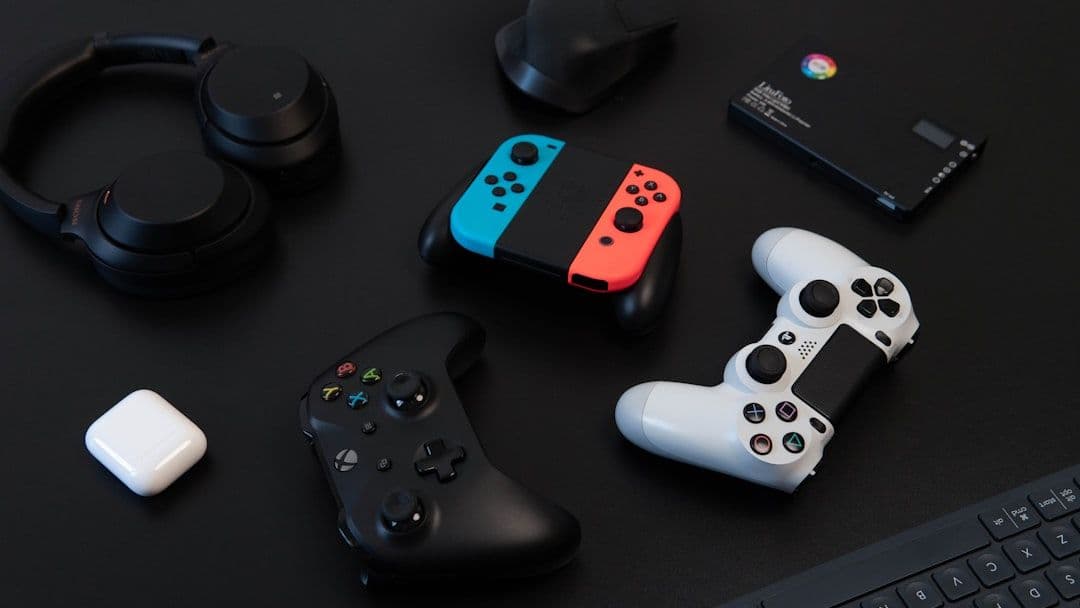
I still remember the smell of my first console. It was that distinct mix of hot dust, ozone, and cheap plastic that filled the living room when I finally got my hands on a launch-day unit. For three decades, that physical box under the television has been our ritual. We save up. We camp out. We bring the heavy black box home like a trophy. But lately? The box feels… heavy. Not just in weight, but in relevance. There’s a quiet shift happening behind the scenes, a slow migration of our digital lives into the ether, and if you’ve been paying attention, you know exactly what I mean.
We’ve been conditioned to accept the seven-year cycle. You buy the hardware, you deal with the mid-generation refresh, and you pray the GPU doesn't give out before the next big title drops. It’s a tedious, expensive cycle that feels increasingly archaic. Why are we tethered to a hunk of metal that depreciates the moment it leaves the warehouse?
Cloud gaming isn't just about playing on your phone on the bus. That was the old sales pitch, and it was a bit insulting to be honest. It’s about the total decoupling of experience from infrastructure. We’re reaching a point where the massive server farms in the Midwest have more graphical muscle than any living room console ever could. They don't heat up your room in the summer, and they certainly don't sound like a jet engine taking off when you boot up an open-world RPG.
People love to talk about input lag like it’s a boogeyman. Ten years ago? Yeah, it was a legitimate problem. You’d press 'jump' and your character would respond three business days later. It was unplayable. But look at the fiber-optic infrastructure now. Look at edge computing. The signal is faster than our biological reaction times in many cases, and if you aren't playing in a professional competitive tournament, the difference is practically invisible to the human eye.
We've reached a plateau where the hardware can do more than our eyes can actually process. I played a high-fidelity title last weekend entirely through a browser, and I honestly forgot I wasn't running it locally. The only reason I remembered? My electricity bill didn't spike, and my fan stayed silent. That’s a win in my book.
Manufacturers aren't stupid. They know that selling a console at a loss or even at a slim margin is a headache. They want services. They want the subscription model. And for the player, it’s a strange trade-off. We lose physical ownership, which, let's be real, we were already losing to digital downloads anyway. But we gain universal access.
Think about the friction of 'updating.' You sit down for an hour of gaming, only to find a 50GB patch waiting for you. By the time it’s done, you’re tired. You’re done. You close the game. Cloud gaming kills the patch. The patch happens on the server. You log in, and it's just there. The friction vanishes. It changes how we interact with our hobby.
There’s a comfort in the shelf full of game cases. It’s part of the identity. Moving to the cloud feels like giving that up. But are we really? Or are we just trading a tangible pile of plastic for a more fluid relationship with content? We spent decades optimizing for hardware. Now, we’re optimizing for accessibility. It’s a different kind of freedom.
Not quite yet. We’re in a transition, a long, messy middle. You’ll still see consoles in stores for years, maybe a decade. But think about the last generation. How many 'exclusive' titles really stayed exclusive? The walls are coming down. The 'console generation' as a concept a rigid, gated era of computing power is dissolving. We aren't moving from one box to another anymore; we’re moving toward a state of constant, fluid updates.
If you look at the trajectory, the expensive box becomes the thin client. A screen, a controller, and a connection. That’s it. Your smart TV, your laptop, your tablet they all become entry points. You aren't buying the hardware; you're buying the access. It feels a bit cold to write it out like that, but there's a certain elegance to it too. It democratizes the experience.
We have to talk about the e-waste. Millions of consoles end up in landfills every few years. That’s a staggering amount of precious metal and plastic. Cloud gaming, theoretically, centralizes this. Yes, the data centers use power massive amounts of it but they can be managed, cooled, and upgraded more efficiently than the millions of individual boxes humming in people's bedrooms. It’s a shift from 'distributed chaos' to 'centralized maintenance.' The jury is still out on the long-term impact, but the potential for a cleaner model is there.
Developers spent years fighting the limitations of fixed hardware. 'How do we squeeze more performance out of this chip?' It was a creative constraint, sure, but it was also a bottleneck. Now, the bottleneck is simply bandwidth. Once we stop caring about local clock speeds, developers can build worlds that aren't hampered by the heat constraints of a tiny box under your TV. They can go bigger. Much bigger.
The transition isn't going to be a clean snap. It’s going to be a blur. You’ll keep your console, maybe, for a few more years. You’ll use the cloud for casual play, and you’ll keep your physical media for the stuff you care about. But slowly, imperceptibly, the proportion will shift. You’ll find yourself booting up the cloud service more often because it’s just easier. You’ll find yourself buying games that don't need a massive download. And one day, you’ll look at the console gathering dust and wonder why you keep it around.
It’s not just a technical upgrade. It’s a shift in how we value our time. We spent a long time being 'the generation of the box.' We loved our proprietary connections and our wired controllers. But the next generation? They won't care about the box. They won't care about the hardware spec. They’ll care about the game, the social space, and the immediate gratification. And honestly? I think I'm okay with that.
The box is dying. Long live the game.
Ethnic Koti Editorial Team. (2026). "The Death of the Console Generation: Why Cloud Gaming Is Finally Coming of Age". Ethnickoti Blog. Retrieved from https://ethnickoti.com/blog/the-death-of-the-console-generation-cloud-gaming-evolution
Join the conversation. Be respectful and helpful.