Hardware|14 minutes Read
The Death of the Discrete GPU: Why Integrated Hardware is Finally Winning the War
Ethnickoti

I still remember the smell of my first dedicated graphics card. It was a dusty, metallic odor the scent of pure, unadulterated heat. For two decades, that was the price of admission. If you wanted to edit 4K video, render a complex 3D scene, or just play a game without it looking like a slideshow, you needed a massive brick of silicone and copper tethered to your motherboard. You needed a discrete GPU. It felt like a rite of passage, a hefty tax paid to the gods of performance.
But lately, my desk feels strangely empty. Or, more accurately, my PC case does. We are witnessing a shift that a lot of old-school builders like me find genuinely hard to swallow. The discrete GPU, that hulking centerpiece of the gaming PC, is slowly losing its relevance. It is being squeezed out by something smaller, cooler, and frankly, much smarter.
For years, we told ourselves a lie: that more power consumption equaled more performance. We bought 850-watt power supplies and watched our electric bills climb. We accepted that a GPU needed its own dedicated pool of VRAM because the data path between the CPU and the rest of the system was just too slow. It was a fragmented way of computing, born out of necessity rather than design perfection.
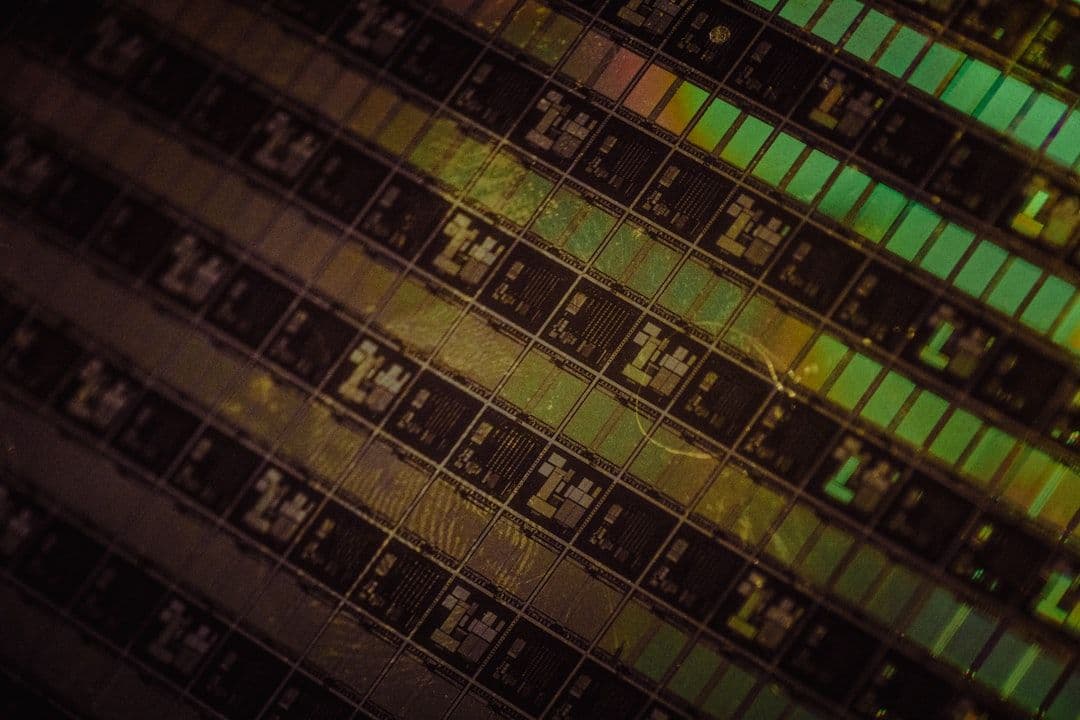
Then came unified memory architectures. You look at what Apple did with the M-series chips and you realize how inefficient our old ways were. By putting the CPU, GPU, and high-speed memory on the same silicon die essentially forcing them to talk to each other in the same room rather than across a noisy hallway latency plummeted. The bandwidth became staggering. You don't need a dedicated 16GB of VRAM if your GPU can pull directly from the same pool of lightning-fast system memory that the CPU uses.
I remember debugging games in the early 2010s where half the effort was just moving data back and forth between PCIe lanes. That latency is the silent killer of performance. When you see modern integrated solutions like Intel’s Lunar Lake or the latest mobile chips from AMD, you aren't just looking at "good enough for integrated graphics." You are looking at hardware that removes the bridge between the processor and the graphics core. The data isn't traveling anymore. It is just there.
The companies that rely on selling massive, three-fan monsters are quiet about it, but they are terrified. They know that once the average user sees that they can edit high-bitrate video on a thin laptop that stays cool on their lap, the days of the $800 GPU upgrade are numbered. The barrier to entry for creative work, for high-end simulation, for local AI processing, is dropping fast.
We spent so long obsessing over teraflops that we forgot about physics. Heat is the enemy. Every watt of heat you dump into a case is a watt that could have been used for logic. Discrete cards are essentially massive radiator-dependent heat dumps. Integrated chips? They are elegant. They handle tasks with such low power draw that they stay silent under loads that used to make my old rig sound like a jet engine preparing for takeoff.
If you think this shift is only about gaming or video editing, you are missing the bigger picture. AI is the final nail in the coffin for discrete dependency. These new integrated chips come with dedicated NPU cores and specialized tensor units that are becoming part of the standard fabric of the CPU. The ability to run large language models or stable diffusion local-only without a massive, power-hungry card is changing who can use these tools.
I’ve run local models on integrated hardware that would have fried a mid-tier card five years ago. And it does it with maybe 20 watts of power. It’s wild. We are entering an era where your computer is one cohesive engine, not a collection of disparate parts that barely tolerate each other.
There is a part of me that is nostalgic, I admit. Building a PC used to be a personality test. You chose your brand, you chose your card aesthetic, you had to worry about clearance and airflow. There was a tactile satisfaction to clicking a massive GPU into a PCIe slot. It felt like engineering. The new world is different. It is more consumer-focused, more streamlined, less "DIY" in the messy, cable-managed sense.
But honestly? I don't miss the troubleshooting. I don't miss the driver conflicts between my integrated chip and my discrete card. I don't miss the sag. We are trading the ability to fiddle for the ability to just get stuff done. And for most people, that is a massive upgrade. The war is ending, and the victors are the ones who stopped trying to make bigger, hotter hardware and started making smarter, unified silicon.
For now, yes. If you are doing extreme 8K rendering or training massive neural networks from scratch, you still need that dedicated power. But the target audience for those cards is shrinking. For 95% of users including prosumers integrated is catching up faster than the hardware enthusiasts want to admit.
Not at all, it just means the architecture is changing. We’ll move toward modular computing, maybe even chiplet-based builds where you swap out localized modules. The era of the monolithic card is fading, but the spirit of customization is just finding a new, more efficient way to exist.
If you are trying to play a AAA title at 4K with ultra settings and ray tracing, you will still struggle. But for 1080p and even 1440p high-refresh gaming, the new wave of integrated chips is shocking. The gap is closing by roughly 20-30% every year. We are closer than you think.
Absolutely. We are moving away from massive desktop towers with industrial-grade fans. As chips get more efficient, your next high-performance rig might be a small, silent box on your desk that you barely notice. No more room-warming heat dumps.
It’s going to crater. Eventually, those massive cards will become collector’s items, like vintage sports cars. Useful for a specific niche, but impractical for daily driving when compared to the efficiency of the new silicon hitting the market.
Ethnic Koti Editorial Team. (2026). "The Death of the Discrete GPU: Why Integrated Hardware is Finally Winning the War". Ethnickoti Blog. Retrieved from https://ethnickoti.com/blog/the-death-of-discrete-gpu-integrated-hardware
Join the conversation. Be respectful and helpful.