Snapchat|14 minutes Read
The Ghost in the Machine: How Snapchat’s AI Lens Revolution is Redefining Digital Identity
Ethnickoti

I remember when a filter meant nothing more than making your skin look a little less tired or slapping a pair of cartoon dog ears on your head. We all had that moment. You open the app, you tap the screen, and boom you’re transformed. It was a novelty. A joke to send to your friends that would vanish in ten seconds. But somewhere along the line, the joke got serious. The filters stopped just sitting on top of our faces and started interacting with the world around us. And more importantly, they started whispering things about who we are when nobody’s watching.
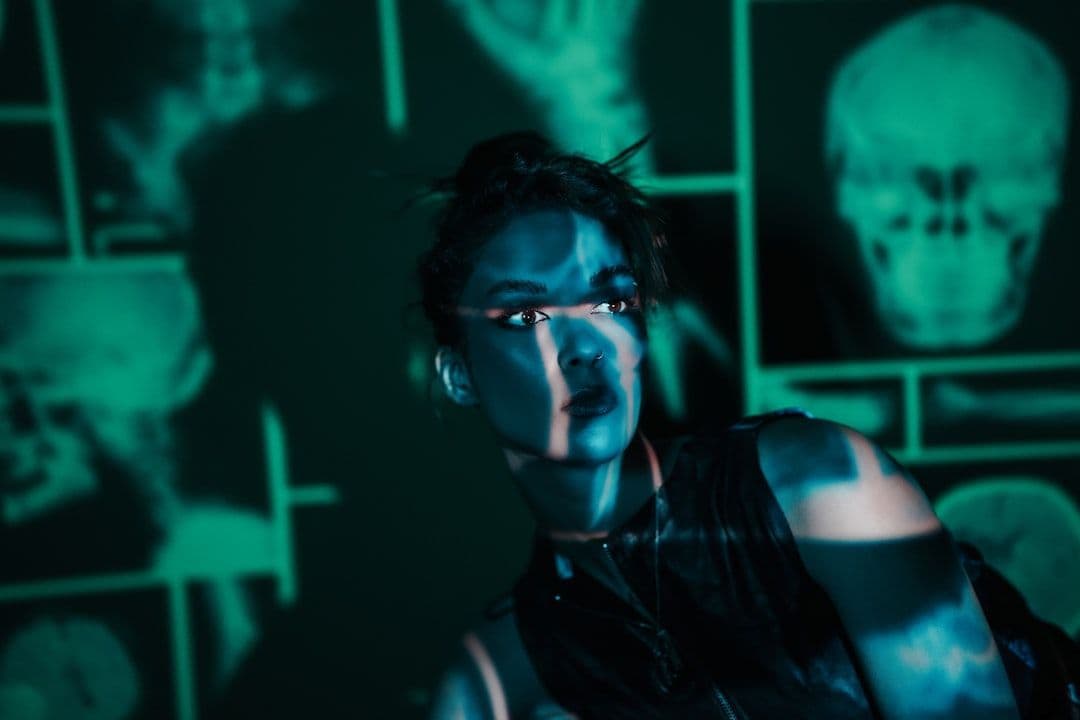
Snapchat has quietly become the laboratory for a weird, wonderful, and slightly unsettling shift in how we build our digital selves. It isn’t just about looking better anymore. It’s about the ghost in the machine the way AI interprets our surroundings and grafts a new reality onto our everyday lives. This isn’t just tech hype. It’s the way we’ve started to perform identity in the real world, through a digital lens.
Back in the early days, if you wanted to change your look, you picked a mask. You put it on, you took your photo, and you moved on. Now? The AI doesn’t just map your face; it understands the geometry of the room you’re standing in. It knows the light, the depth, and the textures of the wall behind you. When you move, the digital overlay moves with you, responding to the physics of the environment. That’s a huge psychological leap.
Think about it. We’ve spent years curating feeds on other platforms picking the best angle, the right lighting, the perfect caption. But Snapchat’s AI lenses move the focus from a polished static image to a living, breathing performance. It’s a mirror that shows you the version of yourself you want the world to see, in real-time. It forces us to ask: if the mask is better than the face, how long until we forget which one is the original?
Generative AI has kicked the door down. We aren’t just applying pre-made templates anymore. We are feeding prompts into these lenses, creating textures, environments, and identities that never existed before. One minute you’re in a coffee shop in Seattle, and with a swipe, you’re standing in the middle of a surrealist painting where the rain is made of neon light. That kind of agency is addictive. It changes how we view our personal narrative. It’s not about capturing a moment; it’s about illustrating it.
We used to talk about the 'digital footprint' a static trail of things we’d said and photos we’d posted. But in the era of AI lenses, identity is becoming liquid. It flows. It changes based on the context of the lens we choose. I might be a tech skeptic in the morning, a sci-fi dreamer at lunch, and a minimalist by dinner. And Snapchat’s tech is right there, bending the light to fit the vibe.
This fluidity is a double-edged sword. It’s incredibly liberating, sure. Who doesn't want the power to be whoever they feel like for a moment? But it’s also exhausting. We’re constantly managing the gap between the physical self and the projected self. The ghost in the machine isn’t the AI it’s the part of us that feels the need to constantly upgrade our presentation just to keep up with the software.
Consider the memories feature. When you look back at a Snap from three years ago, you aren't just seeing yourself. You’re seeing a version of you that existed inside a specific, AI-augmented reality. These memories become more vivid than real life because they were designed to be. They’re stylized, brightened, and curated by code. Is this changing how we remember our own pasts? Absolutely. We’re starting to prefer the AI-filtered version of our memories to the raw, grainy truth.
There’s a profound shift happening in how we socialize. When you send a friend a Snap with a custom AI lens, you’re sending more than a picture. You’re sending a shared context. You’re inviting them into a temporary world that you built together. It’s a shorthand for human emotion. You don’t need to say you’re feeling 'dystopian' you just select the lens that makes the sky look like a broken screen and send it.
This makes communication faster, yes, but it also makes it more abstract. We are layering meaning upon meaning. Sometimes, I worry that we’re losing the ability to be plain with each other. If everything is wrapped in a filter, where’s the room for the unvarnished, awkward truth? Sometimes you need to just send a blurry photo without the glitz, but the app makes that harder and harder to do.
The ego is the ultimate beneficiary of this tech. We’re all naturally inclined to want to look better, be more interesting, or fit into a specific aesthetic. Snapchat’s AI doesn't judge. It just gives us the tools to be that better version of ourselves. It plays into our deep-seated need for validation. And it does it so well, it’s almost transparent. You don’t even notice you’re doing it anymore. You just open the camera, and the ghost takes over.
We’re looking at a future where this stuff isn't confined to a 6-inch screen. With smart glasses and wearable AR, the lens is going to be our contact with the world. We will be walking around with these layers active permanently. Imagine walking through a park and seeing your friends' 'digital scent' or a historical overlay on the buildings. It sounds cool, but it also means our identity is permanently tied to the cloud.
Will we still have a private self? Or will we be entirely composed of public-facing, AI-generated projections? It’s a heavy question, but one we need to ask. Because the tech is moving fast, and we are, at best, tagging along for the ride.
The ghost in the machine isn't going anywhere. It’s part of the furniture now. The key isn't to reject the tech that’s not going to happen, and honestly, why would you want to miss out on the fun? The key is to keep a grip on what’s real. To remember that beneath the neon overlays and the face-mapping magic, there’s still a person holding the phone. Someone who, despite all the filters, is still looking for genuine connection.
Don't let the AI define your limits. Use the tools, play with the identities, have the fun. But don't let it become your only language. Because at the end of the day, the coolest thing you can be is yourself no filters attached.
Yes, to an extent. There’s a psychological phenomenon where people get so used to seeing themselves with specific enhancements that the 'raw' version begins to feel less like their real face. It’s a mild form of body dysmorphia that is becoming increasingly common. Being aware of the difference is the best way to keep your feet on the ground.
It’s subtle, but it’s there. If you’re constantly using lenses that emphasize certain moods or aesthetics, you might find yourself gravitating toward those expressions in your daily interactions. We tend to mirror the environments we exist in, even the digital ones.
Photography as a capture of truth is fading. AR-enhanced imaging is becoming the new standard for social interaction. Traditional photography will likely remain as an 'art form,' much like film photography is today, while the 'live' augmented snap becomes our primary mode of documentation.
The risk is that we start optimizing ourselves for the algorithm rather than for our own happiness. If your digital identity starts feeling like a job, you’re losing the plot. True identity is found in the things you do when you aren't trying to impress anyone.
Expect more spatial awareness. The AI is learning to understand context the difference between a classroom, a street, and a living room. Future lenses won't just look cool; they will offer utility, like real-time language translation or object identification in your field of view.
Ethnic Koti Editorial Team. (2026). "The Ghost in the Machine: How Snapchat’s AI Lens Revolution is Redefining Digital Identity". Ethnickoti Blog. Retrieved from https://ethnickoti.com/blog/snapchat-ai-lens-digital-identity-future
Join the conversation. Be respectful and helpful.