Twitter|12 min read Read
How Creators Are Actually Using Grok AI in 2026
Ethnickoti

Most AI writing tools still feel strangely disconnected from internet culture.
They generate polished sentences. Generic ideas. Predictable structures. You ask for social content and somehow end up with corporate LinkedIn energy wrapped in startup jargon nobody actually talks like.
Grok feels different for one specific reason: it lives much closer to the chaos.
Because of its integration with X and real-time conversations, Grok has become surprisingly useful for creators who work inside fast-moving content ecosystems. Trend-based creators. Newsletter writers. YouTubers. Founders building personal brands at 1 a.m. while half-reading breaking news threads.
That real-time awareness changes the texture of the outputs. Not perfectly. AI still sounds like AI sometimes. But Grok is much better at understanding internet momentum than many older tools that rely heavily on static training behavior.
And honestly, that’s why creators started taking it seriously.
This part matters more than prompt engineering tricks.
The people getting exceptional results from Grok usually aren’t asking it to “write content” from scratch and blindly publishing whatever appears.
That approach almost always produces bland material eventually.
Instead, experienced creators use Grok like an acceleration layer.
Idea expansion
Research compression
Hook generation
Outline drafting
Content repurposing
The human still shapes the final voice.
That distinction is becoming more important now because audiences are learning to recognize AI-generated writing surprisingly fast. Especially on X. You can almost feel when a thread has no human fingerprints left in it.
The creators standing out in 2026 are using AI to think faster not to sound artificial.
Traditional AI models often struggle with platform-native tone.
They can write grammatically correct content, sure. But internet language moves weirdly. Fast. Slightly irrational sometimes.
Grok benefits from being tightly connected to X conversations and trend cycles. That gives it stronger instinct for:
Viral hook formats
Current creator language
Trend momentum
Cultural timing
Conversational post structures
It’s especially strong for creators who publish frequently and need idea velocity without constantly starting from zero.
That mental fatigue is real, by the way. Nobody talks about how exhausting constant ideation becomes after months of daily publishing.
Grok helps reduce some of that cognitive drag.
One of the more underrated uses for Grok is information synthesis.
Instead of opening twenty tabs and manually piecing together fragmented discussions, creators increasingly use Grok to summarize trends, conversations, and reactions before building content around them.
Especially for fast-moving niches.
AI news. Crypto. Creator economy shifts. Tech launches. Internet controversies. Those topics evolve hourly now.
Grok’s real-time context layer becomes genuinely useful there because it pulls from live discussion environments instead of relying entirely on older static information.
Some creators now begin every content session with prompts like:
"Summarize the biggest conversations happening around AI creator tools this week."
"Why are people arguing about this startup launch on X?"
That workflow alone saves an absurd amount of time.
This is where many beginners misuse AI tools.
They ask for one output and stop there.
The better process is conversational refinement.
For example, a creator might start with:
"Write an X thread about AI replacing repetitive jobs."
Then immediately continue:
“Make the hook stronger.”
“Shorten the sentences.”
“Add more tension.”
“Remove generic advice.”
“Make this sound more conversational.”
That iterative loop dramatically improves output quality.
Honestly, AI prompting in 2026 feels less like commanding software and more like directing a slightly overenthusiastic collaborator who occasionally says strange things.
You shape it through conversation.
There’s still skepticism around AI-assisted blogging, and some of that skepticism is deserved. Pure AI articles often feel hollow after a few paragraphs.
But creators using Grok intelligently aren’t publishing raw drafts untouched.
They’re using it to accelerate structure.
A typical workflow looks something like this:
Generate a detailed outline
Expand one section at a time
Rewrite heavily afterward
Add stories, opinions, examples, and lived experience
Fact-check everything manually
That last part matters more than people realize.
Grok can still hallucinate facts sometimes, especially during fast-moving news cycles. Confidently too. Which is dangerous if creators stop verifying information independently.
The strongest AI-assisted writers are usually the strongest editors.
This happened faster than many designers expected.
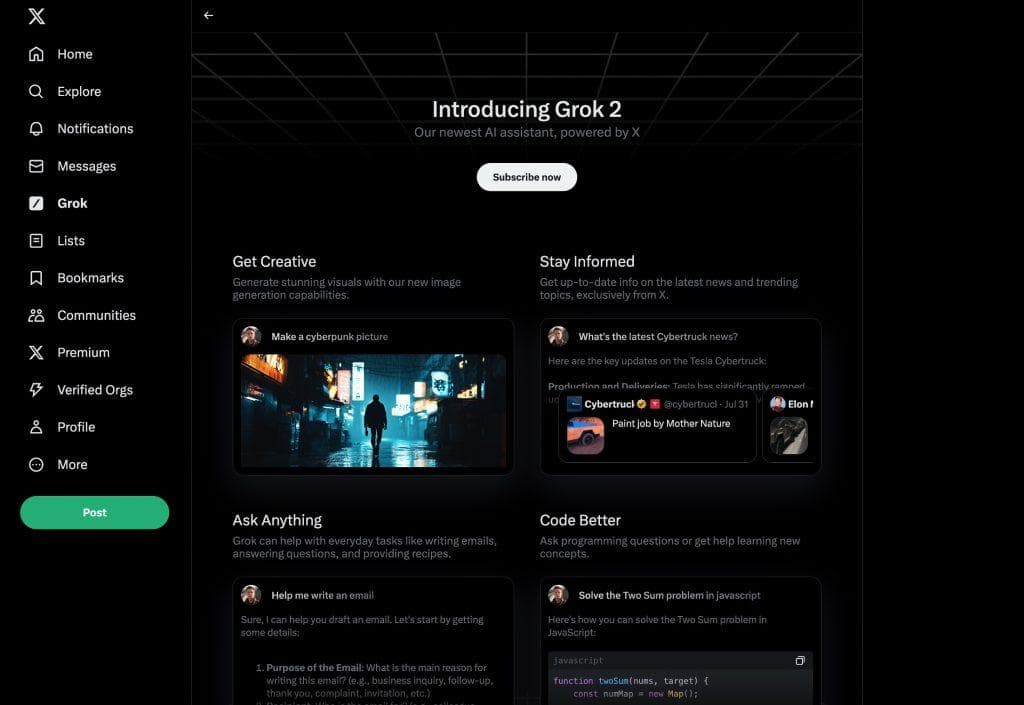
Grok’s image tools are increasingly used for:
Thumbnail concepts
Social graphics
Brand visuals
Moodboards
Marketing assets
And the quality jump from early AI art tools has been dramatic.
Still imperfect, obviously. Hands still go weird occasionally. Text rendering can break. But for ideation and concept visuals, Grok has become genuinely practical.
Prompt specificity matters enormously here.
The strongest image prompts usually include atmosphere details:
"Cinematic cyberpunk office at night, neon reflections, rainy windows, realistic lighting, moody atmosphere."
That level of specificity changes outputs dramatically.
Video generation still feels slightly surreal sometimes.
You type a sentence and suddenly there’s a cinematic drone shot of a futuristic city unfolding on screen. A little uncanny. A little impressive.
Creators are already using Grok-generated clips for:
YouTube intros
Instagram Reels
AI storytelling
Product advertisements
Mood sequences
The outputs aren’t perfect replacements for professional filmmaking yet. But they’re becoming powerful supplements for creators with limited budgets or fast production schedules.
That matters because content speed increasingly influences growth online.
This may be Grok’s biggest advantage operationally.
One strong idea can become an entire content ecosystem.
For example:
A blog becomes an X thread
The thread becomes a Reel script
The Reel becomes LinkedIn content
The discussion becomes a newsletter topic
Grok accelerates this transformation process incredibly well because it can quickly reshape tone, structure, and formatting for different platforms.
The creators growing fastest in 2026 usually aren’t creating more ideas than everyone else.
They’re extracting more value from the ideas they already have.
This distinction matters because there’s still anxiety around AI replacing creative work entirely.
Realistically, what Grok does best right now is reduce friction.
Research friction. Drafting friction. Ideation friction. Repurposing friction.
But taste still matters. Perspective still matters. Human observation still matters.
You can generate infinite content now. That doesn’t mean people will care about it.
The creators who stand out are still the ones with recognizable voice and clear thinking. Grok just helps them move faster once they know what they want to say.
AI is becoming the production layer. Human judgment is becoming the differentiator.
Ethnic Koti Editorial Team. (2026). "How Creators Are Actually Using Grok AI in 2026". Ethnickoti Blog. Retrieved from https://ethnickoti.com/blog/how-to-use-grok-ai-for-content-creation-2026
Join the conversation. Be respectful and helpful.