Gaming|18 minutes Read
The Death of the Console Generation: Why Handhelds Are Winning the Future of Gaming
Ethnickoti

I remember the smell of my old living room carpet. It was that distinct mix of stale soda, dust, and the ozone scent of a television tube running hot for eight hours straight. Back then, gaming was an anchor. You sat on the couch, tethered to a brick of plastic by a controller cable, and the world outside the living room simply ceased to exist. It was a commitment. A ritual. Today? That ritual feels like an antique.
We are witnessing the slow, quiet sunset of the traditional console generation. For decades, the industry lived and died by the horsepower war who could push more pixels, who could render the most realistic sweat droplets on a character's forehead. But something weird happened on the way to the 8K future. We stopped caring about the box under the TV. We started caring about the friction between us and the game.
The modern console is a beautiful, overpowered anchor. Don’t get me wrong, my PS5 is a marvel of engineering, but it is also a prisoner of geography. It demands that I stay in one place. It demands that I clear my schedule. In 2026, time is the rarest currency we have. If I have twenty minutes while waiting for an oil change or sitting in a departure lounge, I don’t want to be told that I need to be in my living room to play my favorite AAA title.
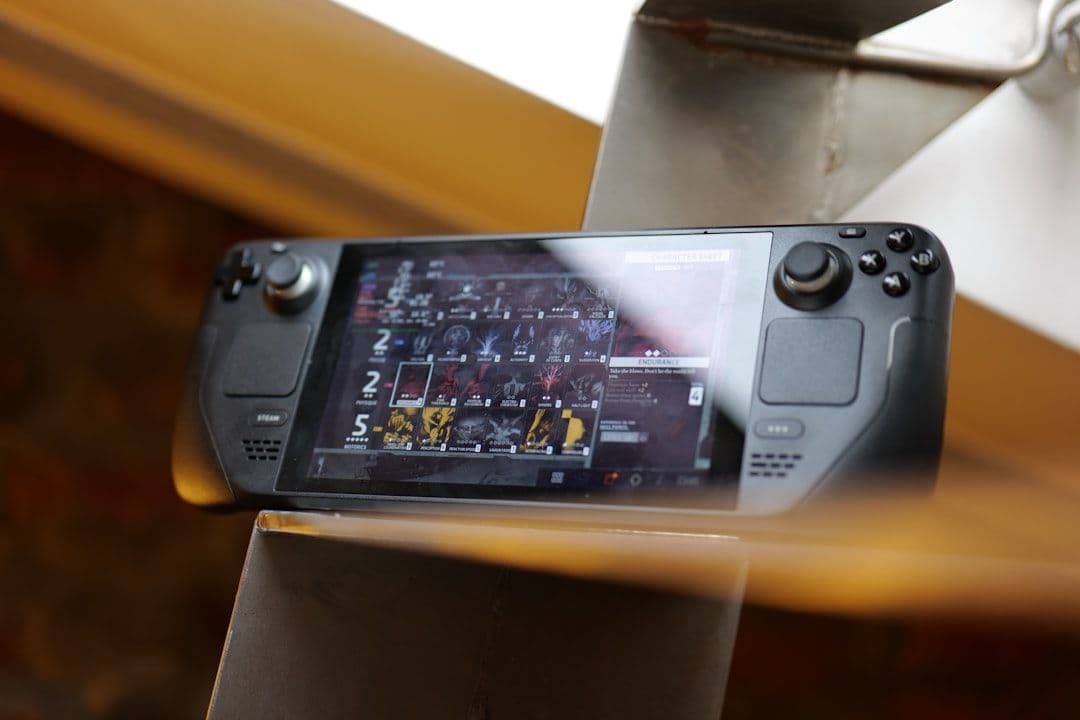
Handhelds and I’m not just talking about the Switch have fundamentally shifted the power dynamic. When the Steam Deck hit, it wasn't just a gadget; it was a manifesto. It whispered a simple truth: your library should go where you go. Suddenly, the “living room experience” became a limitation rather than a selling point.
Remember those days? You get home from work, you’re exhausted, you want to play a game. But first, you have a 40GB update. Then you have a firmware patch. Then the console needs a restart. By the time you’re actually moving a character, you’ve spent half your available gaming time looking at a progress bar. Handhelds have forced a change. They thrive on sleep modes, on instant resumption, on the idea that gaming should be a snack, not a banquet.
This isn't about power anymore. It’s about presence. If a game isn’t accessible, it might as well not exist for most of us. We are moving toward a reality where the hardware in your pocket is the primary interface for your digital life. Why should gaming be the exception?
There is a funny thing about small screens: they focus you. When you’re staring at a massive 75-inch OLED, your eyes drift. You look at your phone. You notice the dust on the shelf. When you’re holding a handheld, you are locked in. The immersion isn't provided by the scale of the display, but by the intimacy of the device.
Developers are starting to notice. We are seeing more titles that respect the rhythm of a handheld player. Quests are getting shorter. Save points are more frequent. The game is becoming designed for the life we actually live, not the life we wish we had where we could sit in a dark room for six hours without a care in the world.
I’ve spent hundreds of hours with various handhelds, and the ones that succeed aren't the ones with the most teraflops. They are the ones that don’t make my wrists ache. It’s a boring point, but it’s the most important one. If your gaming device is a chore to hold, you won’t use it. We are seeing a renaissance in industrial design that mimics high-end camera grips and controller layouts, proving that the handheld experience has finally matured into something professional.
Let’s talk money. Consoles are expensive. Not just the box, but the ecosystem. You buy the console, you buy the subscription, you buy the proprietary accessories. It’s a walled garden. The handheld movement is tearing down those walls. We are seeing a move toward open-source platforms, universal stores, and devices that don't trap you in a brand loop. If I can play my library on a $400 handheld that also doubles as a media machine, why would I drop $600 on a box that only does one thing?
The math just doesn't add up for the dedicated living room console anymore. The future isn't about owning a machine that lives under your TV. It’s about owning a machine that fits in your backpack. The value proposition has flipped, and the manufacturers who don't pivot are going to find themselves left with nothing but, well, dust.
Everyone talks about the cloud as the future. And maybe it is. But look at where streaming works best: on handhelds. Taking that massive render power and beaming it to a light, portable screen is the peak of the handheld dream. You get the fidelity of a beastly PC with the freedom of a notebook. It’s the best of both worlds, provided your Wi-Fi isn't a dumpster fire. We are already seeing the friction points latency, bandwidth caps being smoothed out by better mesh networking and edge computing. The cloud isn't going to kill the console; it’s going to turn the console into a ghost, and the handheld into the body.
There is a myth that gaming in public or on a handheld is lonely. Actually, it’s the opposite. I’ve had more conversations about games while playing my handheld on a train than I ever did while sitting in my living room. It’s a beacon. It says, 'I like this, do you?' The living room console is exclusionary. It says, 'This is my space, keep out.' Handheld gaming is performative, social, and mobile. It brings games back into the stream of real life instead of keeping them hidden in the basement.
I still look at my physical game discs sometimes. They sit on a shelf, collecting dust, like relics from a different civilization. I love the *idea* of them. But I haven't put one in a drive for over a year. My brain has adjusted to the convenience of the digital library, to the feeling of having every world I love right there in my palm. It’s a strange feeling, like realizing you don’t need the anchor anymore. You’ve been swimming this whole time.
Maybe that’s what this is all about. Not the death of gaming, but the birth of a new kind of freedom. We aren't losing the console; we are outgrowing it. Like a teenager leaving home, we’re taking our passions with us, into the world, wherever that may lead.
We are going to see a lot of companies try to fight this. They’ll release 'Pro' consoles with better cooling, louder fans, and bigger power bricks. They’ll hope we stay in the living room because that’s where they can monetize us best. But they are fighting gravity. Once you’ve experienced the freedom of playing a triple-A title in a park or on a plane, there is no going back to the tether.
The future of gaming isn't in a box. It’s in our hands. And for the first time in a long time, that feels like exactly where it should be.
Ethnic Koti Editorial Team. (2026). "The Death of the Console Generation: Why Handhelds Are Winning the Future of Gaming". Ethnickoti Blog. Retrieved from https://ethnickoti.com/blog/death-of-console-generation-handheld-gaming-future
Join the conversation. Be respectful and helpful.