Discord|9 minutes Read
The Best Discord Bots for Servers in 2026 (That People Actually Keep Using)
Ethnickoti

A Discord server can feel alive or painfully empty. Sometimes the difference is just a few well-chosen bots.
People tend to obsess over channel layouts, fancy icons, custom emojis. Meanwhile the real heartbeat of most active communities sits quietly in the background handling moderation, welcoming new members, assigning roles, playing music, logging suspicious activity, nudging conversations forward. Good bots make a server feel effortless. Bad ones turn it into a cluttered vending machine of slash commands nobody remembers.
And honestly, by 2026, server members are less patient than they used to be. If your moderation is slow, if spam floods channels for ten minutes straight, if onboarding feels confusing, people leave. Fast.
The good news? Discord’s bot ecosystem is still ridiculously strong. Some tools have matured into almost full community-management platforms. Others focus on one thing and do it unusually well.
These are the bots server owners keep returning to not because they’re trendy for a month, but because they solve real problems without creating new ones.
There’s a reason people joke that every Discord server eventually installs MEE6.
It’s approachable. That matters more than some admins admit.
A lot of server owners aren’t developers. They don’t want to spend two hours reading documentation just to create reaction roles or automated welcome messages. MEE6 figured that out early and built around simplicity instead of complexity.
The dashboard remains one of the cleanest around. You can set up leveling systems, moderation filters, YouTube alerts, Twitch notifications, timed messages, auto roles all without feeling like you’re configuring enterprise software from 2009.
Its leveling system still works especially well for gaming communities and creator-focused servers because people genuinely respond to visible progression. Strange little dopamine loop. Someone chats for three nights, unlocks a new role color, suddenly they’re emotionally invested in the server.
That said, there’s a small frustration longtime admins know well: many of the more interesting features live behind premium plans now. It isn’t a dealbreaker, but free-tier limitations became more noticeable over the past couple years.
Best fit: creator communities, gaming servers, streamers, mid-sized social servers.
Some bots focus on fun. Dyno focuses on preventing chaos.
If you’ve ever dealt with raids, spam waves, scam link floods, fake Nitro giveaways, or those weird moments where twelve bot accounts join simultaneously and start posting crypto nonsense... you understand why moderation bots matter.
Dyno became popular because it handles the ugly side of community management exceptionally well.
Its moderation tools feel dependable rather than flashy. Detailed logs. Automated punishments. Anti-spam filters. Mute systems. Timed bans. Raid protection. Everything sits where you expect it to.
And reliability matters more than people think. Admins don’t praise moderation bots when they work. They only notice them when they fail. Dyno rarely does.
One thing worth mentioning though: Dyno isn’t trying to become a social engagement platform. You won’t find the same polished leveling mechanics or community gamification systems you’d get elsewhere. It knows its lane.
For large public servers, that’s usually enough.
Public communities with thousands of members
Servers vulnerable to raids
Communities with rotating moderation teams
Servers needing extensive moderation logs
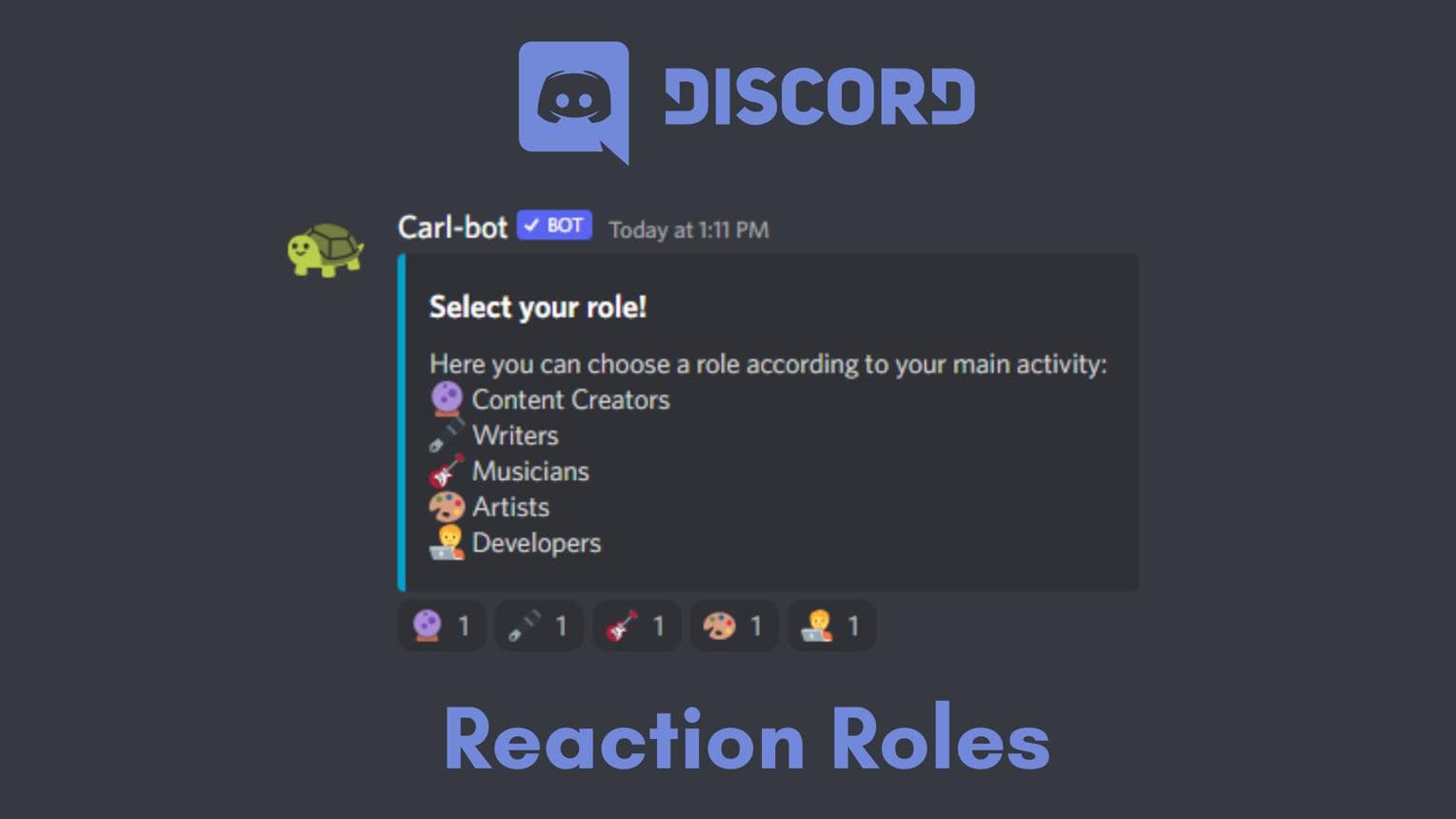
Reaction roles changed Discord culture more than people expected.
A few clicks and suddenly members organize themselves: platform preferences, region tags, game interests, notification groups, fandom categories. Servers stopped needing moderators to manually assign everything.
Carl-bot dominates that space.
There are alternatives, sure. But Carl-bot’s flexibility is hard to beat once you understand how it works. You can build surprisingly advanced automated systems around reactions, permissions, embeds, and logging.
The catch is pretty obvious after about fifteen minutes: beginners sometimes get overwhelmed.
The interface isn’t terrible. It’s just dense. There are layers inside layers. Experienced admins love that because they want precision. New server owners occasionally stare at the dashboard like they accidentally opened airplane controls.
Still worth learning.
Especially for fandom servers, gaming clans, anime communities, and large social hubs where role organization matters constantly.
Discord music bots have had a rough few years.
Licensing issues hit hard. Some bots disappeared overnight. Others became unstable or packed themselves with ads and strange premium systems.
Hydra survived because it kept things relatively simple.
It plays music well. That sounds obvious until you’ve sat through crackling audio, endless buffering, broken playlists, and commands failing mid-session during a late-night gaming run.
Spotify integration remains one of Hydra’s strongest features. DJ permissions are useful too, particularly in larger voice channels where too many people fighting over songs becomes… exhausting.
There’s something oddly comforting about music bots on Discord. Study servers use them constantly. Friend groups idle in voice chat with playlists running for hours. Even communities built around productivity end up wanting background audio eventually.
Hydra understands its purpose and sticks to it.
Not every bot needs to become an “all-in-one platform.” Sometimes focused tools age better.
Some communities don’t need structure. They need energy.
Dank Memer has been fueling chaotic Discord conversations for years now and somehow keeps evolving without losing its weird personality.
The economy system remains absurdly addictive. Daily rewards, gambling mechanics, item collecting, mini-games, meme commands it turns inactive chats into constant interaction loops.
Not always productive interaction, admittedly.
There’s a balance issue some server owners run into. Too much Dank Memer activity can completely hijack conversation flow. Channels become walls of commands and economy spam instead of actual discussion.
The smarter communities usually isolate it into dedicated channels. That keeps the entertainment factor without overwhelming everything else.
And honestly? It works.
Some of the most active friend-group servers still rely heavily on meme and economy bots because they create reasons to interact even during slow periods.
Tatsu feels different.
Less like a utility tool. More like a social layer built on top of Discord itself.
Its profile systems are polished in a way that encourages identity-building inside communities. Reputation systems, collectibles, economies, personalized progression all of it subtly pushes members toward long-term engagement.
Anime communities especially embraced Tatsu years ago, but it expanded well beyond that niche. Social servers use it constantly because people enjoy showing off customized profiles and activity levels more than they’d probably admit publicly.
One thing Tatsu doesn’t really try to do is hardcore moderation. It’s not built for that role. Pairing it with something like Dyno usually makes more sense.
Still, if your goal is making members emotionally attached to the server itself, Tatsu deserves serious consideration.
This part rarely gets discussed enough.
New server owners often go through a phase where they install everything. Poll bots. Counting bots. Currency bots. AI bots. Welcome bots. Ticket bots. Mini-game bots. Horoscope bots for some reason.
Then the server starts feeling noisy and strangely corporate at the same time.
Command overlap becomes annoying. Permission management gets messy. Moderation conflicts appear. Half the bots stop being used after two weeks anyway.
Healthy servers usually run leaner setups.
Three to six bots is often enough unless you’re operating a massive public community.
A surprisingly effective combination looks something like this:
One moderation bot
One engagement or leveling bot
One entertainment or music bot
Optional utility bots depending on server type
That’s usually plenty.
MEE6 plus Dyno still works beautifully for most gaming communities. Add Hydra if voice channels stay active regularly.
You don’t really need six different entertainment bots. People mostly want smooth moderation and a reason to stay engaged between gaming sessions.
MEE6 paired with Carl-bot tends to cover almost everything streamers need: notifications, onboarding, reaction roles, subscriber access, community organization.
Especially helpful once communities start scaling quickly after viral growth periods.
Hydra fits naturally here because ambient music matters more than people expect during long sessions. Dyno handles moderation quietly in the background.
Study servers actually thrive on calm infrastructure. Too many flashy bots ruin the atmosphere.
Tatsu plus Carl-bot remains incredibly common for a reason. Role organization and social gamification become central parts of the experience.
People stay longer when communities feel personalized.
A quick reality check here.
Too many admins hand bots full administrator access without thinking twice. That’s risky. Occasionally very risky.
Bots should only receive permissions they genuinely need. Nothing extra.
If a music bot requests moderation privileges, pause for a second and ask why.
Security habits inside Discord communities have improved a lot recently, partly because scams and token theft attacks became more common. Server owners are finally paying closer attention.
Good. They should.
That sounds backwards, but it’s true.
The strongest Discord communities don’t feel automated even when bots are doing enormous amounts of invisible work behind the scenes. Moderation happens smoothly. Roles assign themselves correctly. Spam disappears instantly. Music works. Activity systems encourage participation without becoming exhausting.
People stay because the server feels comfortable.
That’s the real goal.
If you’re starting fresh in 2026, MEE6 remains the safest all-around choice. Dyno still dominates moderation. Carl-bot handles customization beautifully. Hydra owns the music category. Dank Memer keeps chats alive. Tatsu strengthens social identity better than almost anyone else.
You don’t need every bot. You just need the right combination for the kind of community you actually want to build.
Ethnic Koti Editorial Team. (2026). "The Best Discord Bots for Servers in 2026 (That People Actually Keep Using)". Ethnickoti Blog. Retrieved from https://ethnickoti.com/blog/best-discord-bots-for-servers-2026
Join the conversation. Be respectful and helpful.