Apple|9 minutes Read
The Post-iPhone Era: Is Apple Vision Pro the Real Heir to the Throne?
Ethnickoti

I remember the day the first iPhone dropped. It was magic. You touched a glass screen, and the world just shifted underneath your fingertips. For nearly two decades, that glass slab has been the center of our universe. It dictates how we wake up, how we work, and frankly, how we ignore people sitting right in front of us at dinner. But look around a crowded subway or a busy coffee shop. We are all staring down, our necks bent at unhealthy angles, trapped in the infinite scroll. Apple knows this. They’ve known it for a while.
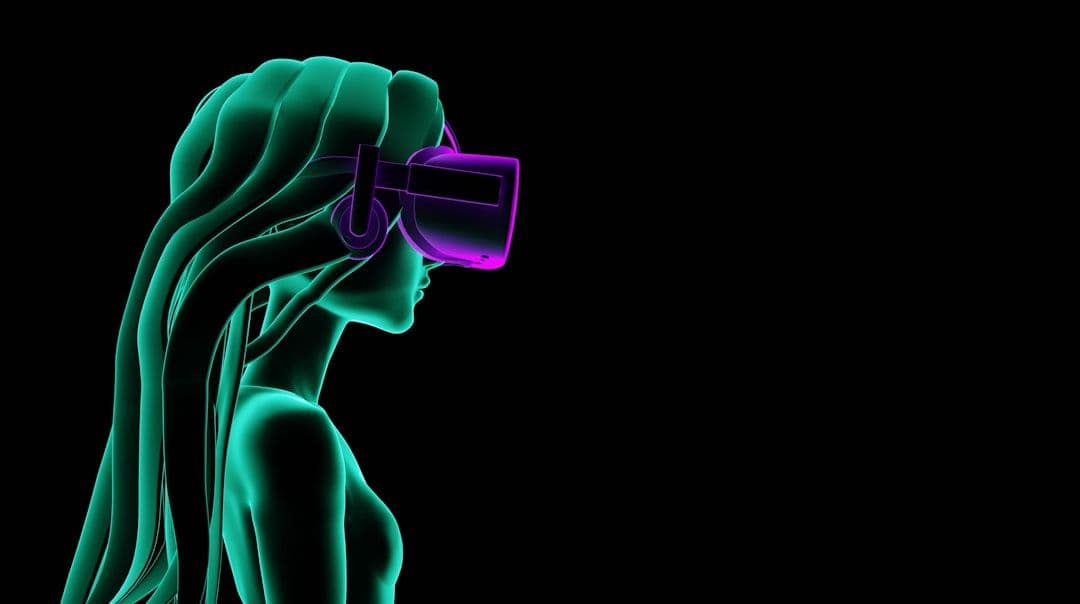
Enter the Apple Vision Pro. It’s bulky. It’s expensive enough to make your bank account weep. And yet, there is something fundamentally different about it. It isn't just another gadget to keep in your pocket. It is an attempt to put the computer on your face. The company calls it spatial computing, which sounds like marketing speak, but when you actually use it when you reach out to pluck a window out of thin air the feeling is weirdly tactile.
Is it the iPhone killer? Not yet. Probably not for a long time. People forget the iPhone wasn't an instant hit in the way we romanticize it now. The early models were slow, the App Store didn't exist, and you couldn't even shoot decent video. Vision Pro is currently in that awkward, expensive, heavy adolescent phase. It is waiting for its own version of a killer app, that one thing that makes you go, "Oh, I literally cannot live without this."
Our current reliance on smartphones has hit a wall. We have optimized the hell out of a five-inch display, but there is nowhere else to go. You can only put so many pixels in a pocket before the utility starts to drop. The Vision Pro solves a different problem: the screen constraint. Imagine your entire apartment being a canvas for your work, your movies, and your messages. No more hunching over a laptop at a cramped café table.
But there is a catch. A massive one. Social friction. Wearing a piece of hardware on your face creates an immediate barrier between you and the person sitting across from you. Apple tried to fix this with that weirdly uncanny 'EyeSight' display showing your eyes to the outside world, but let's be honest: it feels like science fiction in the worst way. It is a lonely experience. Humans are social creatures, and putting a physical wall of glass and aluminum between us is a hard sell for the mass market.
If we look at the trajectory of personal technology, it always trends toward becoming more invisible. The desktop computer was a beast that lived in a room. The laptop let you move that beast to your desk. The smartphone gave you the internet in your pocket. The natural endpoint isn't a bigger screen; it is the total removal of the frame.
Vision Pro represents the first time Apple has really tried to stop designing for our pockets and started designing for our peripheral vision. It is messy. The battery life is annoying. The external battery pack dangling by a cable feels like a prototype, not a finished product. Yet, when you put it on, the fidelity of the virtual world is so high that your brain struggles to distinguish the digital from the physical. That shift is significant. It is a psychological milestone more than a technical one.
Analysts love to talk about the "end of the smartphone." It is a catchy headline. But let’s keep it real: nobody is wearing a bulky headset to a bar, a concert, or on a crowded morning commute anytime soon. The iPhone is a portable social tool. The Vision Pro is an immersive workstation. They occupy different psychological territories.
I suspect that if this path holds, the iPhone eventually becomes the 'hub' or the 'brain' for the glasses that we will eventually wear. The heavy lifting happens in your pocket, and the visuals are projected into your line of sight. But that is a decade away. For now, the Vision Pro is a high-end laboratory for Apple to figure out how to navigate (oops, I almost used the forbidden word) the physics of light and gesture control without us looking like complete idiots in public.
If you are an early adopter or a creative professional who needs three extra monitors but lives in a studio apartment, yeah, it is a game wait, a big shift. If you are a normal person waiting for the next iPhone? Keep waiting. This isn't the product that replaces the phone. It is the product that teaches us how to interact with the world once the screen is no longer the center of our lives.
We have been training our thumbs to scroll for years. Now, we have to teach our eyes and hands to operate in 3D space. It is a steep learning curve. Sometimes I find myself reaching for an icon that isn't actually there, feeling a bit silly when my hand passes through empty air. But then, the window snaps into place, and for a second, I forget I am wearing a piece of technology at all. That is the magic. And that is why, despite the flaws, the throne is definitely shaking.
The Apple Vision Pro isn't the heir just yet. It is the unruly, talented younger sibling who hasn't quite figured out how to fit in at the family dinner table. But when it finds its stride, watch out. The way we view reality itself is about to get a major update.
Ethnic Koti Editorial Team. (2026). "The Post-iPhone Era: Is Apple Vision Pro the Real Heir to the Throne?". Ethnickoti Blog. Retrieved from https://ethnickoti.com/blog/apple-vision-pro-future-of-computing
Join the conversation. Be respectful and helpful.