Apple|14 minutes Read
The Post-iPhone Era: Is Apple’s Shift to Spatial Computing a Gamble or a Masterstroke?
Ethnickoti

I remember sitting in a dimly lit coffee shop back in 2007, watching the grainy, pixelated livestream of Steve Jobs pacing across that stage. He held up this small, glass-and-aluminum rectangle. It looked impossibly thin. At the time, we didn't know we were witnessing the end of the keyboard-centric world. We didn't know that device would eventually become the appendage that keeps us awake at 2:00 AM, scrolling through the collective anxiety of the internet. Now, nearly two decades later, Apple is trying to perform that same magic trick again, but the stakes feel different this time. They aren't trying to replace a plastic keypad; they are trying to replace the screen itself.
Spatial computing. The term sounds like something pulled from a dusty sci-fi novel written in the nineties, yet here it is, sitting on a table in Cupertino. Is this really the future? Or is it a desperate attempt to stay relevant in a market where everyone already owns the best version of the device in their pocket?
Let’s be honest for a second. The smartphone peaked years ago. Sure, the cameras get a little better, the processors shave off a few milliseconds, and the screens get slightly brighter. But my iPhone 16 doesn't fundamentally change how I live compared to my iPhone 12. We are in the era of incremental upgrades. The innovation has moved from "revolutionary" to "polishing the edges." Apple knows this. Their internal data the stuff they don't show us on stage must be telling them that the growth curve is flattening out. If you're a trillion-dollar company, a flat curve is basically a death sentence.
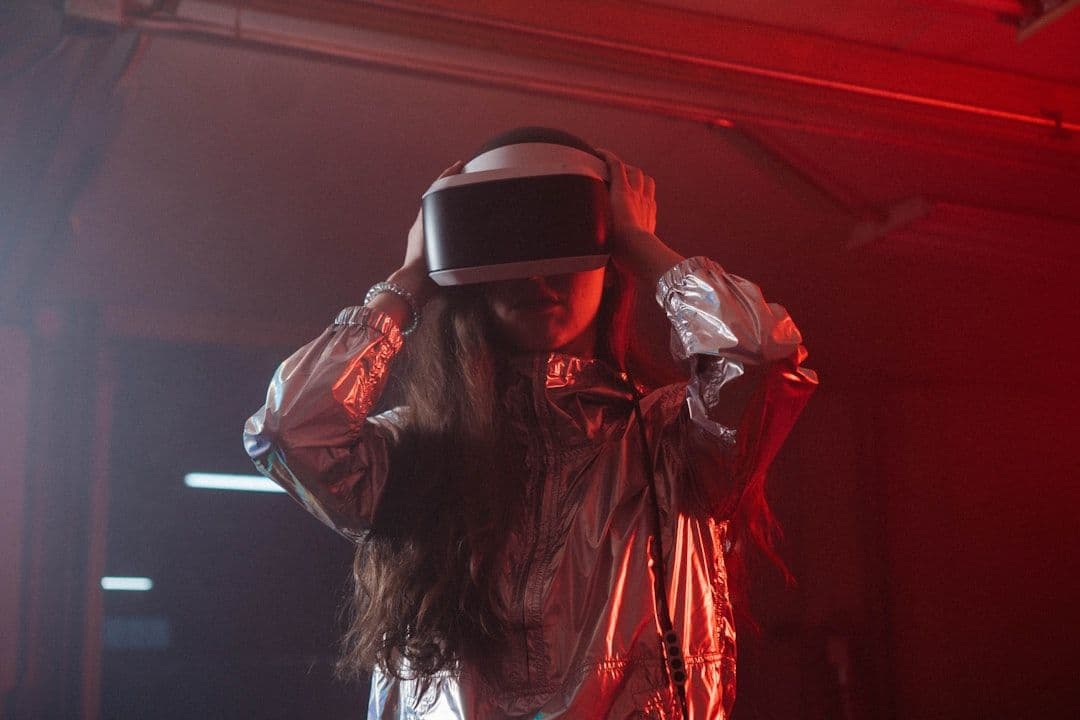
So, they built the Vision Pro. It’s an expensive, bulky, and undeniably impressive piece of engineering. But it’s also a polarizing one. When I first tried it, the sensation was strange. I felt like I was wearing a computer on my face because I was. There is no getting around that weight. But then, I looked at a digital window floating in my living room, and for a split second, I didn't care about the strap or the battery pack. I just saw the potential.
The argument for spatial computing isn't about VR gaming or hiding from the real world. That’s what the other guys were doing. Apple’s pitch is about blending the digital into the physical. It’s about taking the apps you use your calendar, your browser, your photos and letting them occupy the space around you. Think about it: why do we hunch over a six-inch screen to look at a spreadsheet when we could have a twelve-foot virtual monitor that doesn't actually exist?
This shift is risky. It asks the user to do something uncomfortable. It asks them to wear hardware. The iPhone succeeded because it was a pocketable companion that enhanced our existence. The Vision Pro asks you to change your existence. That is a heavy lift for even the most loyal brand.
Wall Street has been skeptical, and for good reason. The price point is astronomical. This isn't a mass-market product; it’s a prototype for the elite, early adopters, and enterprise developers. But Apple has a habit of doing this. They release a "pro" or "first-gen" version to see how the world breaks it, then they iterate. And iterate. And eventually, they launch the sleek, affordable version that everyone buys.
The long-term play here isn't just selling goggles. It’s about owning the next computing platform. If the iPhone era eventually ends and it will Apple needs to ensure that when we move on, we are doing it in their ecosystem. If we are going to be overlaying digital interfaces onto our real-world vision, Apple wants to be the one drawing the lines.
You look at Meta, and they have a completely different philosophy. Mark Zuckerberg is pushing for the metaverse, a digital social hangout space. Apple is pushing for spatial productivity. One is about escapism; the other is about efficiency. I find myself leaning toward the Apple approach. Most of us don't want to live in a video game all day. We want our work, our communication, and our memories to be more accessible, more tactile, and more immersive. If Apple can make this less like wearing a scuba mask and more like wearing a pair of glasses, they’ll win. It’s just that simple. And just that difficult.
There is a glaring issue that tech analysts often skip over: comfort. People like to talk about the resolution of the micro-OLED displays or the eye-tracking precision. But nobody wants to wear a heavy brick on their face for five hours while they answer emails. The biological reality of our neck muscles is the biggest barrier to entry. Every gram counts.
Then there’s the social element. Have you ever tried to have a genuine conversation with someone wearing a face computer? It’s jarring. The "EyeSight" feature, which displays a digital version of your eyes on the outside of the device, feels like an eerie attempt to bridge a gap that doesn't want to be bridged. Until spatial computing becomes truly transparent until it looks like a pair of Ray-Bans it will always feel like a performance.
Yet, I think back to the early days of the Apple Watch. People laughed at it. They called it a glorified pedometer. Now, it’s a standard health device that has genuinely saved lives. Apple has a way of normalizing the weird. They make the bizarre feel essential.
So, is it a gamble? Absolutely. It’s a multi-billion dollar bet that the way we interact with information is fundamentally broken. They are betting that we are tired of the two-dimensional screen. I think they’re right. We are visually hungry creatures. We want to reach out and touch our files, our friends, our memories. We want things to exist in our space.
We are in the "awkward teenager" phase of this technology. It’s lanky, it’s expensive, and it doesn't quite know what it wants to be yet. But if you look closely, you can see the trajectory. Within five years, we will likely have lighter headsets. Within ten, maybe we’ll be using AR contact lenses or sleek, lightweight frames. The hardware will vanish, leaving only the interface. And that’s the real goal.
If Apple pulls this off, the iPhone will eventually be looked at the same way we look at the iPod: a beautiful, iconic, and absolutely vital stepping stone to the next big thing. And if they fail? Well, they’ll have to go back to the drawing board, and the rest of the industry will have to figure out how to keep us interested in a glowing slab of glass for another decade.
We are standing on the precipice of a shift. It’s not going to happen overnight, and it’s going to be messy. But the era of the handheld smartphone is clearly entering its sunset. The future isn't in our pockets anymore; it’s going to be wherever we choose to look.
Ethnic Koti Editorial Team. (2026). "The Post-iPhone Era: Is Apple’s Shift to Spatial Computing a Gamble or a Masterstroke?". Ethnickoti Blog. Retrieved from https://ethnickoti.com/blog/apple-spatial-computing-future-strategy
Join the conversation. Be respectful and helpful.