Apple|18 minutes Read
The Post-iPhone Era: Why Apple’s Pivot to Spatial Computing Changes Everything
Ethnickoti

I still remember the first time I held an iPhone. The glass felt cold, the screen was impossibly crisp, and for the first time, the internet didn't feel like a chore. It was a portal. For nearly two decades, that rectangle of glass has been our primary tether to the world. We wake up to it, we work on it, we hide behind it in awkward social situations. But lately, the magic has started to fray. It’s not that the iPhone is broken it’s just that we’ve hit a wall. There are only so many pixels you can cram into a six-inch slab before the experience stops getting better and just starts getting... repetitive.
Apple knows this. Tim Cook and his team are far too smart to think they can coast on hardware cycles forever. This is why the pivot to spatial computing isn't just a product launch; it’s an existential reset. They are trying to pull us out of our pockets and back into our own living rooms, streets, and offices. It’s a bold, slightly terrifying bet that we are ready to stop looking down.
Think about how much of your day is spent hunching over a glowing sliver of glass. We’ve become a species of neck-craners. The smartphone, for all its utility, is a barrier. It sits between you and the sunset, between you and your child’s face, between you and the actual architecture of your environment. Spatial computing aims to melt that barrier. Instead of pulling up a map on a tiny screen, the map is meant to overlay your field of vision, hovering in the air like a ghost.
But moving from the 2D plane of a screen into the 3D space of our reality is messy. It’s the kind of transition that usually takes decades to get right. We aren't just talking about a better camera or a faster processor here. We are talking about fundamentally altering human-computer interaction. It feels like we’re in 2007 all over again, only this time, the stakes feel a bit more personal because we’re changing how we perceive sight itself.
The biggest hurdle isn't the technology, though heaven knows it’s hard enough to get optics right in such a small form factor. The hurdle is social. Will people actually wear these things? We’ve all seen the jokes about how silly someone looks with a computer strapped to their forehead. But the iPhone was mocked too. People said they’d never give up their physical keyboards. They said nobody would want a phone that died in half a day. They were wrong because the utility outweighed the inconvenience.
Spatial computing has to clear that same bar. It has to be more than just a novelty for gamers or productivity nerds. It has to solve a problem that we didn't realize was a problem until it was gone the problem of distraction. Imagine being able to pin your notes to a wall while you work, or having a digital window open into a different room of your house. It’s about merging our digital lives with our physical existence so that we don't have to choose between the two.
The market is saturated. Every person who wants an iPhone has one. The growth in the mobile sector has plateaued because there’s nothing left to disrupt in the phone industry. Apple needs a new hardware category to keep the stock price healthy, sure, but they also need a new way to keep users in the ecosystem. By shifting to spatial computing, they’re basically claiming the next thirty years of real estate not land, but the space right in front of our eyes.
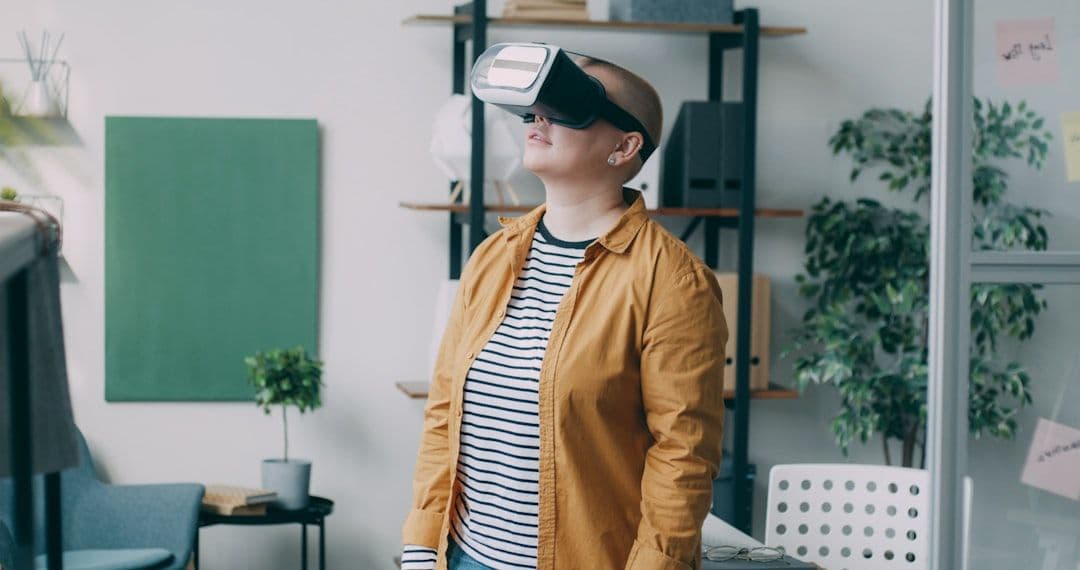
I’ve spent weeks wearing various headset iterations, and I’ll be honest: it’s jarring. The first time you interact with a digital object that feels like it has weight and placement, it’s a trip. But there’s a fatigue that sets in. Your brain isn't used to parsing depth-based information from screens. It’s going to take years for the software to catch up to the potential, for developers to figure out how to stop us from getting motion sickness, and for the design language to move beyond just floating windows in a void.
If you’re already locked into iCloud, the switch won't feel like a migration. It’ll feel like an expansion. That’s the genius of it. You won't have to set up your digital life from scratch; your photos, your messages, and your calendar will just... exist in the room with you. This creates a gravitational pull that competitors will have a hell of a time matching. Trying to build a spatial ecosystem from scratch without the decades of personal data Apple has is like trying to build a house on quicksand.
Of course, this raises massive questions about privacy. If our devices are scanning our rooms to place objects, what exactly is it scanning? Are the cameras capturing our habits, our clutter, our kids playing in the background? We traded our privacy for convenience with the smartphone. We’re doubling down on that trade with spatial devices, and I’m not sure we’ve fully reckoned with the cost yet.
Don't expect the iPhone to vanish overnight. It’ll stick around like the desktop computer did, relegated to specific tasks. But the center of gravity is shifting. We’re moving toward a model where computers are ambient. They’re background radiation. You don't take your computer out of your pocket; you walk into your computer.
It’s going to be a messy middle period. We will have people walking around looking like extras from a sci-fi film while others stick to their screens. Offices will be transformed into hybrid zones where some people are looking at real monitors and others are looking at thin air. It’s going to look weird for a long time. Change usually does.
What fascinates me most is how this will change human interaction. If we’re all wearing headsets, we lose the eyes. The eyes are the window to the soul, right? If I’m looking at a digital display while you’re talking to me, are you actually there? Apple is obsessed with the eyes putting displays on the outside of headsets to show our eyes to others but it’s a band-aid on a bigger problem. We are losing the shared reality that comes from looking at the same thing at the same time.
Maybe this will make us more isolated. Or maybe, just maybe, it will let us share worlds that we couldn't before. If I can bring a digital representation of a friend across the ocean into my living room, does that bridge the distance better than a Zoom call? I’m leaning toward yes, but it’s a fragile technology. The social contract is going to be tested.
We are at a junction. The era of the handheld screen is sunsetting, not because it’s failed, but because it succeeded too well. It turned the world into a series of alerts and scrolls. Spatial computing is an attempt to reclaim the physical world. Whether it succeeds depends on if we actually want that. Do we want more digital input in our spaces, or are we just looking for a way to hide from the messiness of the real world?
I don't have the answers. I just know that Apple has pushed the boulder down the hill, and there’s no stopping it now. We’re in for a wild ride. The next decade won't be defined by who has the best app store, but by who can build the most convincing reality. It’s time to stop looking down and start looking around.
Here is what people are wondering as we step into this new dimension.
Ethnic Koti Editorial Team. (2026). "The Post-iPhone Era: Why Apple’s Pivot to Spatial Computing Changes Everything". Ethnickoti Blog. Retrieved from https://ethnickoti.com/blog/apple-spatial-computing-future-post-iphone
Join the conversation. Be respectful and helpful.