Apple|14 minutes Read
Beyond the Glow: Why Apple’s Pivot to Spatial Computing is Changing Everything
Ethnickoti

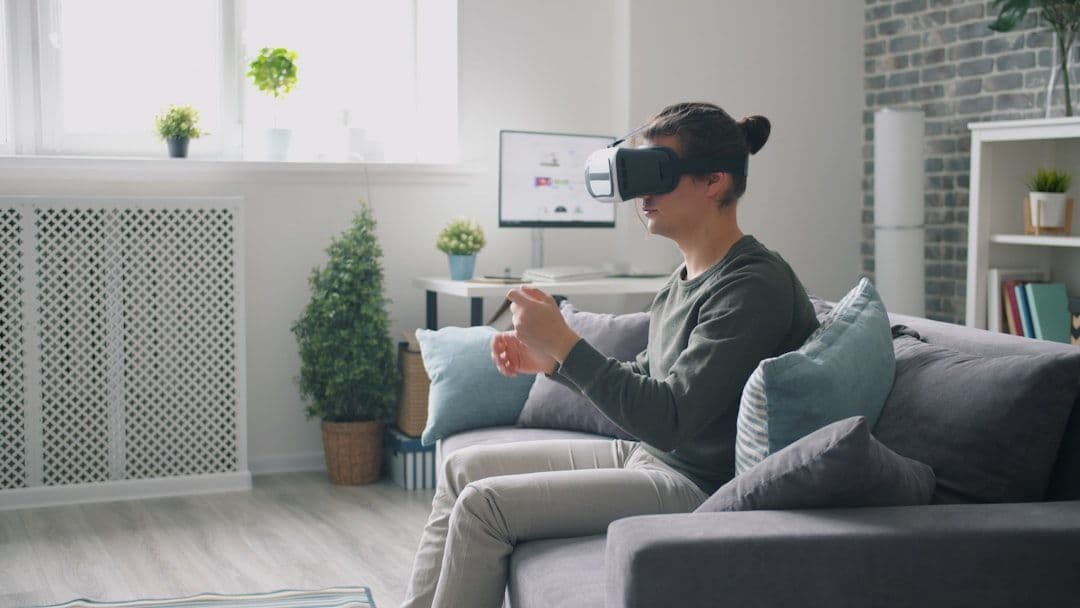
I remember the first time I held an original iPhone. It felt like a smooth, heavy river stone something that belonged in my palm, not a gadget meant to be fought with. We spent fifteen years living inside that screen. We looked down at our laps, necks permanently bent, thumbing through glass like it was a lifeline. But the era of the flat rectangle is winding down. Not with a bang, but with a headset that tracks your eyes and makes you look, frankly, a bit ridiculous in your living room.
Apple calls it Spatial Computing. It sounds like corporate jargon until you actually try it. Then, suddenly, it hits you: the screen is gone. Or rather, the screen is everywhere.
For decades, computing was tethered to architecture. Desks, cubicles, laps. We forced the world into a 16:9 box. When you think about it, that’s incredibly restrictive. Why should my work life be trapped behind a border of black plastic? Spatial computing flips the script. It asserts that digital information should live in the same space as the physical coffee mug sitting to your left.
This isn't just about putting a TV in front of your eyes. It’s about the democratization of your field of view. When you can pin a web browser to the air in your kitchen, the physical environment stops being just a place to exist and starts being a canvas for your tools. It’s messy, sure. It feels a bit like sci-fi overkill at first. But once you realize you don't need a monitor, your relationship with the hardware and the work itself shifts. It becomes intimate.
Technology companies are notorious for chasing trends. But Apple? They wait. They wait until the components are small enough, the heat is managed, and the interface is intuitive enough to not make you nauseous. This pivot wasn't a desperate grab for attention. It was a recognition that we’d squeezed every drop of utility out of the 2D surface. The next frontier isn't a faster chip or a thinner phone. It’s presence.
There is a peculiar tension when you first put on a spatial computer. You’re wearing a mask, yet you see your living room. You see your cat walking past. You see the half-finished laundry. The brain struggles to categorize this. Is it a screen? Is it reality? The answer is that it’s both, and that ambiguity is where the magic happens.
Think about collaborative work. Instead of staring at a shared screen on Zoom, imagine a 3D model of a building project floating in the center of your table. You reach out your eyes track the cursor and you rotate it. You aren't just 'working'; you’re interacting with the environment. It changes the physics of communication. We lose the flatness of the video call and regain the nuance of physical proximity, even when the people we’re talking to are thousands of miles away.
The most jarring part of this shift is the lack of a controller. No clicking, no physical keyboard, no mouse. Just your eyes and your hands. It feels like magic, but it’s really just high-fidelity tracking. You look at an icon, it glows. You pinch your fingers, and it opens. It’s the most natural way we’ve ever interacted with machines because it mimics how we interact with the physical world. I reach for my water, I look at it, I grab it. The computer is finally catching up to the way humans actually operate.
We have to talk about the isolation factor. Even with 'pass-through' video showing you the room, you are still wearing a computer on your face. There’s a barrier there. A literal glass and metal partition between you and the person sitting across from you. Can we really have a genuine connection when there’s a piece of hardware strapped to our skull?
Perhaps, in the early days, the answer is no. But history repeats itself. People laughed at people wearing Bluetooth earpieces in the early 2000s. They scoffed at people using phones in public. Eventually, the hardware gets smaller, lighter, and more invisible. We’ll reach a point where the 'headset' is just a pair of glasses. And when that happens, the distinction between digital and physical will vanish entirely. That is both a beautiful prospect and a terrifying one.
Some fear we are heading toward a WALL-E style future. I tend to think we are just evolving our toolset. We’ve been 'absent' from the real world since the dawn of the internet. At least with spatial computing, the computer is mapped to the room you're actually in. It anchors the digital world to your physical house, rather than pulling you into an anonymous, dark server room somewhere in the cloud.
The industry is bracing for this. If Apple is moving to spatial, everyone else is running to catch up. Software developers who have spent twenty years optimizing for touch-screens are now having to learn the geometry of 3D space. It’s a massive transition. It’s the difference between drawing on a piece of paper and sculpting in clay.
Businesses are already looking at how to train employees in virtual environments without the risk of real-world accidents. Mechanics, surgeons, architects they are the first beneficiaries. But the rest of us? We’ll be buying our groceries in virtual stores, visiting museums from our couches, and watching movies where the actors are effectively sitting on our sofas. It’s going to make the smartphone look like a rotary telephone.
I don't think we’re going to abandon our phones tomorrow. The pivot is slow. It’s awkward. It’s expensive. But the direction is set. We are moving away from the screen as a destination and toward the screen as an ambient layer on top of our existence. It’s weird, it’s a bit invasive, and it’s undeniably the future. We’ll just have to make sure we don't forget to take the headset off once in a while to see the real world the one without the filters, the one that doesn't need to be rendered in high resolution to feel real.
Everything is changing. And honestly? I’m kind of excited to see where the edges of this new world actually land.
Ethnic Koti Editorial Team. (2026). "Beyond the Glow: Why Apple’s Pivot to Spatial Computing is Changing Everything". Ethnickoti Blog. Retrieved from https://ethnickoti.com/blog/apple-spatial-computing-future-impact
Join the conversation. Be respectful and helpful.