Apple|12 minutes Read
The Post-iPhone Era: Is Apple’s Shift to AI and Spatial Computing Enough to Lead the Next Decade?
Ethnickoti

I remember standing in line for the iPhone 4. It felt like holding a piece of the future, a slab of glass that somehow knew what I wanted before I asked. But let’s be honest with ourselves: those days of breathless anticipation are fading. Every year, the new phone arrives, and the upgrades feel less like leaps and more like fine-tuning a watch that already works perfectly. We are living through the slow, inevitable sunset of the smartphone as our primary computing paradigm. And nobody knows this better than the folks in Cupertino.
Apple is currently trying to engineer its own succession plan. They are pivoting away from the hardware-first dependency that defined the last two decades. Now, it is all about the ambient intelligence within the silicon and the spatial environments we inhabit. The question isn't just whether the tech is cool it’s whether this transition can keep them at the top of the food chain when the screen in your pocket finally loses its grip on your attention.
Saturation is a cold, hard fact. Almost everyone who wants an iPhone has one. The growth isn't coming from new adopters anymore; it’s coming from squeezing more value out of the existing ecosystem. This is why you see the aggressive push into services, wearables, and now, the heavy lift of generative AI integration.
For years, Apple played a different game than the rest of the industry. While others chased specs more megapixels, faster refresh rates, higher battery density Apple sold a lifestyle. They sold the idea that your tech shouldn't get in your way. But the generative AI boom caught them slightly flat-footed. We saw the rise of models that could compose emails, generate art, and code scripts, and they were happening in browser windows, not natively on our devices. If Apple didn't internalize this, they risked becoming the hardware company people used to reach someone else's intelligence.
When you look at Apple Intelligence, you notice a specific design choice: they didn't try to build a chaotic chatbot that hallucinations on command. Instead, they focused on utility. Summarization, tone adjustment, and system-wide search. It’s boring, but it’s practical. It’s Apple’s way of saying, "We don't need to be the world's best creative engine; we need to be the most reliable assistant for the tasks you actually have to do."
It’s a smart defensive play. By baking these models into the OS, they make leaving the Apple ecosystem a nightmare of lost workflows and disconnected local data. It’s sticky. Very sticky.
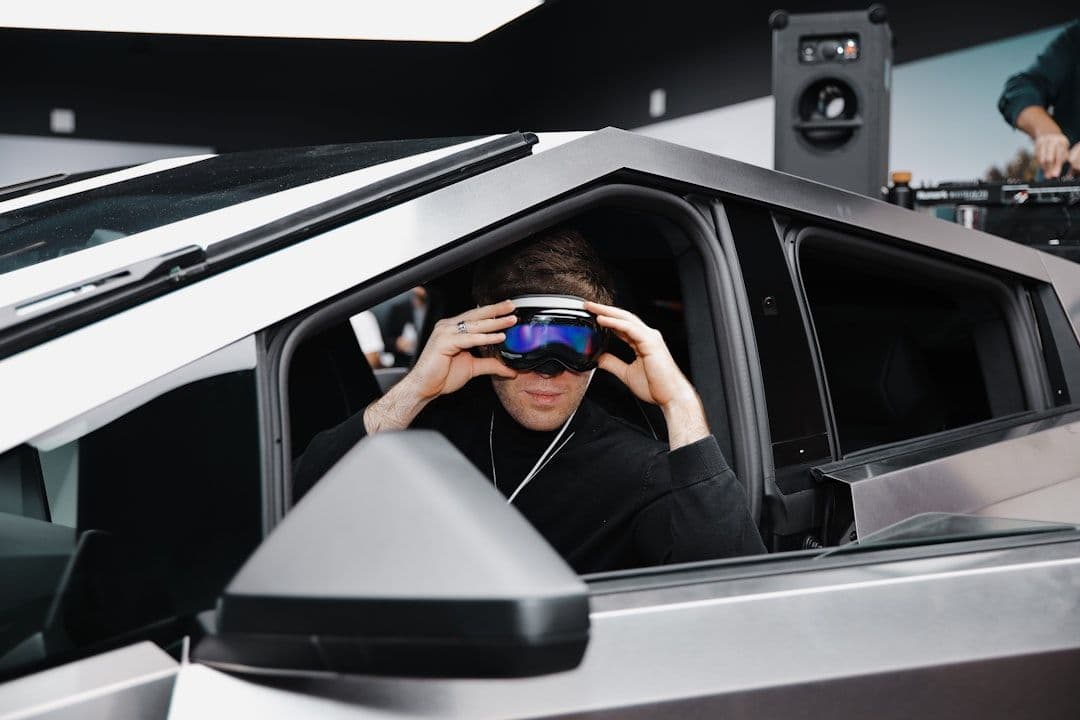
Then there is the Vision Pro and the wider spatial computing vision. If the iPhone was about shrinking the world to fit in your hand, spatial computing is about expanding your reality to fit the room. It’s an ambitious, almost arrogant goal.
Is it going to replace your monitor next year? No. Probably not even in five years. But that’s not the point of the early versions. Apple is training a generation of developers to build for a world where screens are optional. They are teaching us how to interact with digital objects as if they have mass, weight, and presence. It feels clunky right now heavy headsets, battery packs, isolation but I remember when people laughed at the idea of carrying around a small computer that was also a phone. We got used to the device. Now, they want us to get used to the absence of the device.
The real hurdle here isn't the resolution of the micro-OLED panels or the speed of the M-series chips. It’s the human element. We like our hands free. We like looking at each other's eyes. Unless spatial computing can move into a form factor that feels as natural as a pair of glasses, it will remain a luxury toy for the high-end office. Apple knows this. The timeline they are working on is likely a decade long, perhaps two. They are willing to bleed cash on R&D today just to own the foundation of the interface tomorrow.
There is a genuine tension at the heart of Apple right now. On one side, you have the massive, reliable cash cow that is the iPhone the engine of their current existence. On the other, you have these experimental, high-risk pivots. History shows that companies often fail to pivot because they are too afraid to cannibalize their own golden goose. Can Apple really embrace a world where the phone is no longer the center of gravity?
I suspect they don't have a choice. The market demands evolution. If they don't lead the shift to ambient AI, a scrappy startup or perhaps a different tech giant will define the rules of the road for the 2030s. Apple is betting that their blend of hardware integration and privacy-first security is the only bridge the average user will actually trust to carry them into this weird, new digital reality.
We have to talk about what we’re losing, though. As we move toward a world where AI anticipates our desires, we are ceding a bit of our own spontaneity. When your phone writes your texts and your headset designs your workspace, are you still driving the car? Or are you just along for the ride, enjoying the scenery? Apple frames this as "liberation from chores," but it feels like a soft narrowing of human capability. We are trading the friction of creation for the smoothness of curation.
This isn't necessarily a critique of Apple, but of the direction we are all headed. The company is simply the best at building the path we’ve all decided to walk down. If they succeed and they probably will, at least financially the next decade will be characterized by a kind of digital omnipresence that makes the last ten years look like the dark ages of manual interaction.
So, is the move to AI and spatial computing enough? Yes, if they stick to their philosophy of making the complex invisible. If they start feeling like a software company, they’ll lose the magic. They need to keep building things that feel like they belong in the real world, not just code trapped behind a glass panel. They are playing for the long game, betting that when we look back on 2035, we won't remember the iPhone as the final word we'll see it as just the prologue.
It’s a daring, perhaps even reckless, bet for a company this big. But then again, they’ve always been good at making us believe that the future is just one software update or one new product launch away. And maybe, just maybe, this time it actually is.
Ethnic Koti Editorial Team. (2026). "The Post-iPhone Era: Is Apple’s Shift to AI and Spatial Computing Enough to Lead the Next Decade?". Ethnickoti Blog. Retrieved from https://ethnickoti.com/blog/apple-post-iphone-era-ai-spatial-computing
Join the conversation. Be respectful and helpful.