Hardware|12 minutes Read
The AI Hardware Revolution: Why Your Next PC Will Be a Neural Engine
Ethnickoti

I remember the first time I pushed a computer until the fan sounded like a small jet engine taking off in my home office. It was back in 2012, rendering a simple video sequence. That frustration the wait, the heat, the sheer physical limitation of the silicon sitting on my desk has defined my relationship with tech for years. But something has shifted. It is quiet now. Actually, it is smarter.
If you have been shopping for a laptop lately, you have probably noticed the buzzwords. NPU. Neural Engine. Copilot+. Silicon-level acceleration. It feels like the industry is scrambling to label everything as “AI-ready,” but beneath the marketing fluff, there is a fundamental change happening in how our computers think. We are moving away from the era of the general-purpose processor being the star, and into an age where our machines have a dedicated organ for intelligence.
For the last decade, “AI” has really just meant “someone else's computer.” You type a prompt, it zips off to a server farm in Oregon, gets processed by a warehouse of H100 GPUs, and sends the answer back. It works, sure. But it is slow, it is private-data-sensitive, and the second your Wi-Fi drops, your “smart” tool turns into a glorified paperweight.
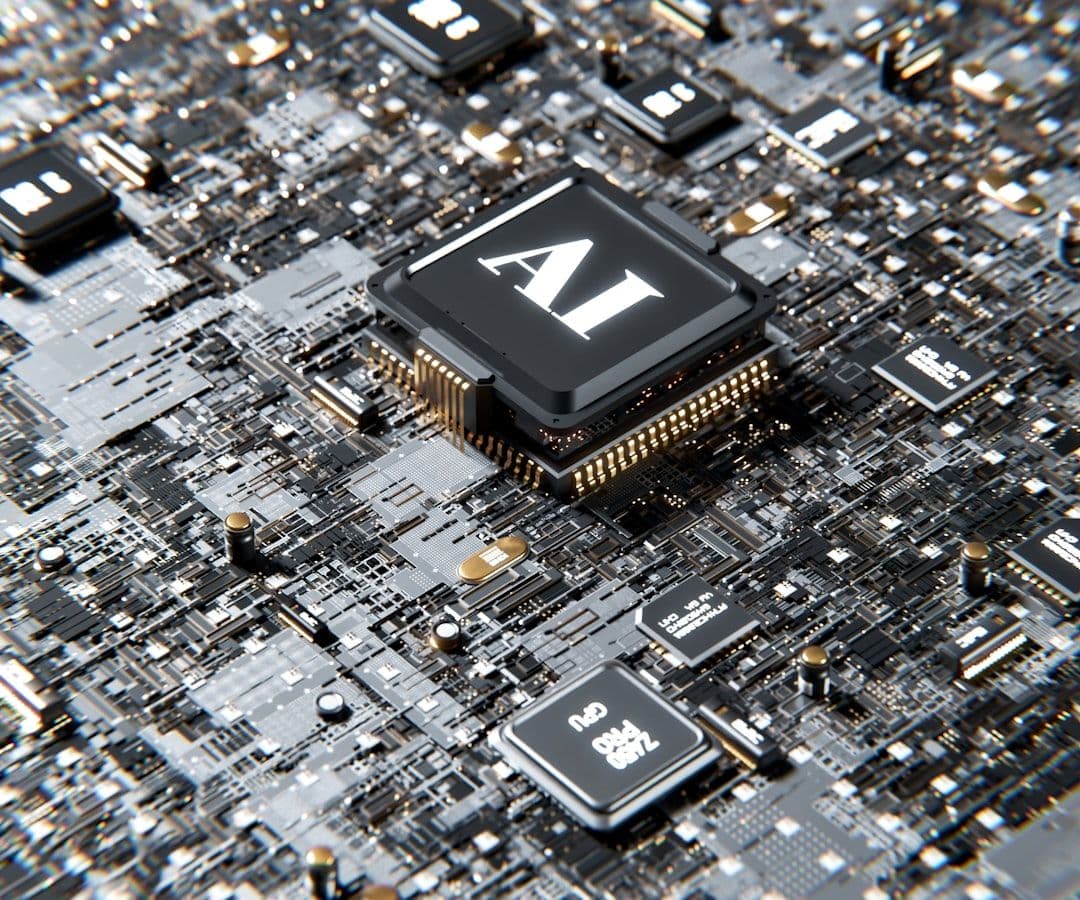
The shift toward the Neural Processing Unit (NPU) changes the geography of compute. By moving heavy matrix multiplication the math that powers everything from LLMs to background blur in video calls off the main CPU and onto a dedicated slice of silicon, we are reclaiming speed. It is not about raw power in the traditional sense; it is about efficiency. Your battery life doesn't tank because the CPU isn't breaking a sweat on background tasks, and the response time? It is nearly instantaneous. It just happens on the motherboard, inches from your fingers.
We spent thirty years obsessed with Gigahertz. How fast can the clock tick? But the NPU is a different beast entirely. It is a specialized accelerator, optimized specifically for the massive, repetitive math problems that AI models crave. Imagine trying to use a scalpel to chop a pile of firewood that is your CPU trying to run a large language model. The NPU is the wood splitter. It does one thing, but it does it with such ferocious efficiency that the CPU looks like it's taking a nap.
This is critical for everyday productivity. Think about noise cancellation during a Zoom call. In the past, that took a heavy toll on system resources. With an NPU, that processing is offloaded to a part of the chip that is basically idling. You get studio-quality audio, your fan stays quiet, and you don't feel like your computer is going to give up on you mid-presentation.
There is a huge, quiet benefit here that nobody seems to talk about enough: local-only processing. We have all become a bit cynical about how our data is handled. Every time I feed a sensitive document into a cloud-based chatbot, there is that little voice in the back of my head asking, Where is this going?
Local AI hardware means your data stays on your drive. If you want a model to summarize your tax documents, or organize your messy inbox, or scan your private photos, it does not need to leave your house. That is the real endgame. It is not just about faster performance; it is about ownership. When the hardware sits on your desk, the data stays on your desk. That is a freedom we have been slowly losing for years.
We are entering a phase where the computer starts to anticipate the user's needs. I don't mean annoying pop-ups or clunky assistants. I mean things like real-time context awareness. Imagine you are writing a document, and the system “understands” the other four tabs you have open, the email you received ten minutes ago, and the project plan you haven't touched in three days. It is not guessing; it is observing the latent connections between your files.
This is where the “Neural Engine” term starts to make sense. It acts as an orchestrator, managing background intelligence so the foreground stays clear for you to actually think. It is a subtle shift, but it makes the computer feel less like a tool you struggle with and more like an extension of your own brain. When the hardware handles the heavy lifting of sorting, summarizing, and filtering, you get to spend more time on the creative “why” rather than the administrative “what.”
Is it worth upgrading right now? That is the million-dollar question. If you are just browsing the web and typing out emails, maybe not. But if your work involves any kind of creative output, the gap is widening fast. Software developers are already shipping features that only run on modern NPU hardware. Within two years, if your computer doesn't have a dedicated neural engine, you are going to feel like you are using a smartphone from 2012.
It is about future-proofing. We are at the very beginning of this curve. Think of it like the introduction of the dedicated Graphics Processing Unit (GPU). At first, it was for gamers. Then, everyone realized, “Oh, wait, the entire interface looks better and works smoother with this.” We are in the pre-GPU equivalent for neural processing. Every app you touch from your photo editor to your spreadsheet software will eventually lean on this silicon.
Don't expect your next PC to start thinking for you like a sci-fi movie. It won't. It is an engine, not a brain. It is an accelerator. It will make things that were previously impossible, or agonizingly slow, feel like magic. It won't make you smarter, but it will certainly remove the friction between having an idea and seeing it on the screen.
I have tested a few machines with these new chips. The difference is most pronounced when the computer is under load. Where my old laptop would stutter and start clicking, the new ones just keep humming along. It is a calm, stable experience. And honestly, in this day and age, that is the best feature any computer can offer.
So where does this go? We are going to see a thinning of the line between software and hardware. The OS will essentially become an AI-driven environment. Instead of clicking icons, you might describe an outcome, and the local NPU will orchestrate the software to make it happen.
We are also going to see a shift in form factors. Because these chips are so efficient, they produce less heat. Less heat means smaller cooling systems. Smaller cooling systems mean thinner, lighter, more powerful devices that last a full day on a single charge. It is a virtuous cycle, and it is going to change what we consider a “pro” machine.
Ultimately, the transition to neural-engine-based PCs is inevitable. It is not just hype. It is the necessary evolution of computing architecture. We hit a wall with CPU clock speeds years ago, and we have been finding workarounds ever since. This is the big one. It is the architecture we have been waiting for to finally make our computers feel as fast as our thoughts.
Ethnic Koti Editorial Team. (2026). "The AI Hardware Revolution: Why Your Next PC Will Be a Neural Engine". Ethnickoti Blog. Retrieved from https://ethnickoti.com/blog/ai-hardware-revolution-neural-engine-pcs
Join the conversation. Be respectful and helpful.