Snapchat|9 minutes Read
Snapchat Best Friends List Explained: What Those Emojis Actually Mean
Ethnickoti

Snapchat has always had this strange little social layer hidden beneath the filters and disappearing photos. People think it’s just an app for random streaks and blurry late-night selfies until they notice those tiny emojis sitting beside certain names. Then suddenly everybody becomes a detective.
One yellow heart appears and someone starts overthinking. A red heart disappears and now there’s tension in the group chat. It sounds dramatic. Sometimes it actually is.
The Snapchat Best Friends list quietly tracks who you interact with the most. Not who you like the most. Not necessarily your real-life closest friends either. Snapchat measures habits, frequency, consistency. Tiny patterns most people don’t even notice while using the app.
And honestly? That’s why the feature confuses so many people.
The good news is the system isn’t as mysterious as it looks. Once you understand how Snapchat assigns Best Friends and what each emoji means, the whole thing starts making sense. Mostly.
Your Best Friends list is basically Snapchat’s ranking system for the people you interact with most often. The app watches who you send snaps to regularly, who replies back, who you chat with, and how consistent those interactions are over time.
It updates automatically. No manual selection. No secret button where you can nominate someone as your best friend.
That part catches people off guard because Snapchat feels personal, but the Best Friends system is driven more by behavior than emotion. You could talk to someone every day in real life and still not see them near the top if you rarely exchange snaps.
Meanwhile, one chaotic streak partner you exchange mirror selfies with at 1 AM every night suddenly climbs the rankings.
Snapchat notices patterns fast.
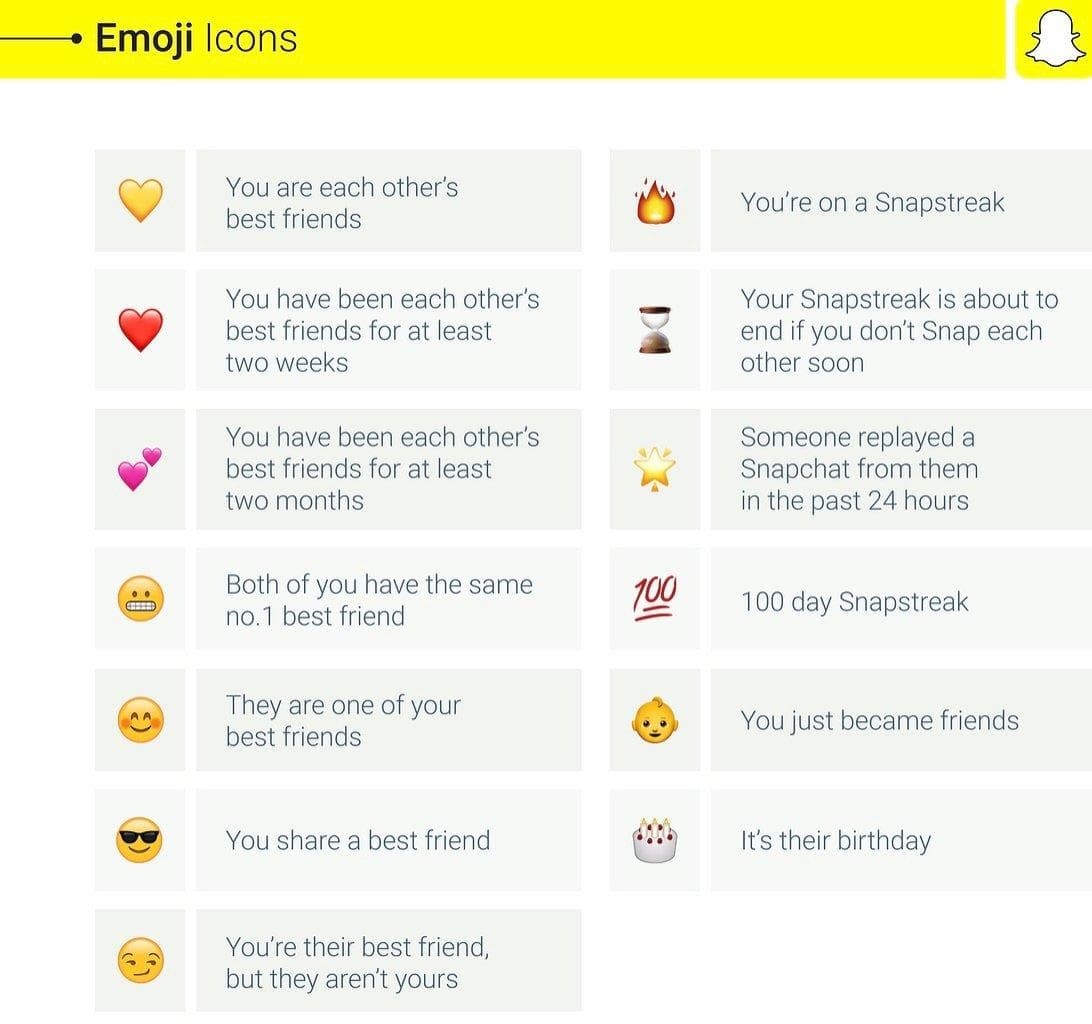
These emojis are where most of the curiosity starts. People screenshot them, compare them, obsess over changes. The meanings themselves are pretty straightforward once you know what Snapchat is tracking behind the scenes.
This means you and another person are each other’s #1 best friend on Snapchat right now.
You send the most snaps to them, and they send the most snaps to you. It’s mutual. Snapchat loves mutual engagement.
A lot of people assume the yellow heart appears instantly after a busy conversation. Usually it takes consistent interaction over several days before Snapchat decides the connection is real enough.
The red heart appears when you stay each other’s #1 best friend for two straight weeks.
People weirdly celebrate this one. Some even try to maintain it intentionally. There’s an oddly competitive side to Snapchat culture that nobody really talks about openly.
Lose the streak of interaction and the red heart disappears. Snapchat can be surprisingly ruthless with emoji demotions.
This is Snapchat’s highest friendship status.
The pink double hearts show up after you remain each other’s top best friend for two months continuously. At that point the app basically recognizes you two as inseparable Snapchat users.
And yes, people absolutely notice when those hearts vanish.
This person is one of your close Snapchat friends, but not your top one.
You interact often enough for Snapchat to rank them highly, just not enough to push them into the highest tier.
Honestly, this is probably the most common emoji people see because most interactions on Snapchat are casual but frequent.
This one means one of your best friends is also one of their best friends.
It doesn’t necessarily mean you two interact heavily with each other directly. There’s just overlap in your Snapchat social circles.
Sometimes this emoji accidentally exposes friend groups you didn’t even realize existed.
This emoji means your #1 best friend is also their #1 best friend.
Which is exactly why people react dramatically to it.
Snapchat probably intended it as a fun social indicator. Human beings turned it into investigative evidence almost immediately.
Snapchat has never fully revealed the exact formula. Which makes sense. Social algorithms are usually guarded pretty closely.
Still, after years of people testing patterns, some things are pretty clear.
Sending direct snaps matters more than just viewing stories.
Consistency matters more than one huge conversation.
Mutual interaction carries extra weight.
Recent activity seems to affect rankings heavily.
Group chats don’t appear to influence rankings much.
There’s also a recency bias baked into Snapchat’s system. Someone can disappear from your Best Friends list surprisingly fast if interactions slow down for even a few days.
Which feels a little harsh sometimes, honestly.
Snapchat currently allows up to eight Best Friends at once.
These aren’t all equal rankings though. The app quietly arranges them based on interaction levels, with your top connections appearing higher in the list.
Some people rotate through those spots constantly. Others somehow maintain the exact same list for months. Usually that says more about a person’s social habits than the app itself.
No. Your Best Friends list is private.
Years ago Snapchat experimented with more visible friendship indicators and people absolutely spiraled over them. The app eventually pulled back.
Right now only you can see your full Best Friends rankings. Other users may still notice mutual friendship emojis beside your name depending on shared interactions, but they cannot open your profile and view your complete list.
Probably for the best.
Snapchat doesn’t hide the list exactly, but it also doesn’t put a giant label on it either.
Open Snapchat.
Tap your Bitmoji or profile icon in the top-left corner.
Scroll down to the Friends section.
Tap My Friends.
Your Best Friends usually appear near the top with the related emojis beside their names.
The rankings can shift quietly in the background. Sometimes overnight.
There’s no shortcut button for this. Snapchat responds to interaction patterns, so the only real way to move someone into your Best Friends list is through consistent communication.
A few things tend to help:
Send direct snaps regularly instead of relying only on chats.
Reply consistently when they snap you first.
Maintain streaks naturally.
Interact daily if possible.
But there’s an important distinction people forget: Snapchat Best Friends are algorithmic, not emotional.
You can intentionally increase interaction with someone and still not feel particularly close to them in real life. Social apps blur that line constantly.
This is probably the most frustrating part for long-time Snapchat users.
You think your rankings are stable. Then suddenly somebody drops off the list entirely after a few quieter days.
Snapchat’s algorithm prioritizes active engagement over history. It cares more about recent interaction patterns than old streaks or past consistency.
That’s why vacation periods, exam weeks, busy work schedules, or even random social burnout can completely reshuffle the list.
And honestly, people read way too deeply into those changes sometimes.
A disappearing emoji doesn’t always mean a disappearing friendship.
Technically yes, though Snapchat doesn’t provide a direct “remove from Best Friends” option.
The ranking changes naturally based on reduced interaction. If you stop snapping someone frequently, the algorithm eventually lowers their position.
Some users clear conversations or mute interactions hoping to influence rankings faster. Results vary. Snapchat’s system updates differently for different accounts.
There’s no perfectly clean reset button unless you completely remove the friend.
It’s fascinating, honestly. Tiny emojis somehow became social status indicators for an entire generation.
Part of it comes from how private and personal Snapchat feels compared to other apps. Interactions disappear. Conversations feel more casual. That creates emotional weight around repeated communication.
So when Snapchat visually confirms a close connection with hearts or smiley faces, people attach meaning to it immediately.
Sometimes harmlessly. Sometimes… not so harmlessly.
A yellow heart can start arguments. A vanished red heart can trigger awkward conversations nobody really wanted to have. Which sounds ridiculous until you remember how much modern friendships live inside apps now.
Tiny symbols. Surprisingly real emotions attached to them.
Snapchat’s Best Friends list is really just a reflection of interaction habits. That’s the simplest way to look at it.
The emojis are fun. Sometimes chaotic. Occasionally a little too revealing for comfort. But they’re ultimately driven by consistency and activity, not hidden emotional rankings.
Once you understand what each symbol means and how Snapchat calculates relationships behind the scenes, the whole feature feels a lot less mysterious.
Though probably not less addictive.
Ethnic Koti Editorial Team. (2026). "Snapchat Best Friends List Explained: What Those Emojis Actually Mean". Ethnickoti Blog. Retrieved from https://ethnickoti.com/blog/snapchat-best-friends-list-explained
Join the conversation. Be respectful and helpful.